
Commercial Loans Explained: A commercial loan is finance provided to a business for a defined commercial purpose. It may fund equipment, premises, working capital, expansion, refinancing or another identifiable business cost.
Unlike personal borrowing, the decision is usually based on the strength of the business, the purpose of the loan and the proposed repayment route.
The principle is simple. Capital should support a measurable business need. However, the structure behind that capital must remain affordable, suitable and clearly understood.
At a Glance
- A commercial loan provides funding for a stated business purpose.
- Loans may be secured or unsecured.
- Lenders assess trading performance, cash flow, credit history and repayment capacity.
- Property, business assets or personal guarantees may support an application.
- Rates, fees and repayment terms depend on the risk presented.
- Commercial mortgages and bridging loans are separate forms of commercial finance.
- Advisers should establish the purpose, amount, term and repayment plan before approaching lenders.
What Is a Commercial Loan?
A commercial loan is an agreement under which a lender advances money to a business. The borrower then repays the capital, interest and any agreed charges over a defined period.
Borrowers may include:
- Limited companies
- Sole traders
- Partnerships
- Limited liability partnerships
- Property companies
- Established trading businesses
The application must normally have a genuine business purpose. The lender will want to understand why the money is needed and how the borrowing will be repaid.
Commercial loans may be used for:
- Purchasing machinery or equipment
- Supporting working capital
- Refurbishing business premises
- Funding expansion
- Consolidating eligible business borrowing
- Acquiring another business
- Managing a temporary cash-flow requirement
A commercial mortgage is more specific. It is normally secured against property used for business or investment purposes. Advisers handling property-backed borrowing can read more about commercial mortgage advice.
How Does a Commercial Loan Work?
The business applies for a defined amount over an agreed term. The lender assesses the application and decides whether the expected return justifies the risk.
If approved, the agreement normally confirms:
- The amount borrowed
- The interest rate
- Whether the rate is fixed or variable
- The repayment period
- Monthly or periodic repayments
- Arrangement and administration fees
- Security requirements
- Personal guarantee conditions
- Early repayment provisions
- Events that could place the loan in default
The borrower should understand the complete cost rather than focusing only on the headline interest rate.
Fees, valuation costs, legal costs and early repayment charges can materially affect the total amount paid.
Secured and Unsecured Commercial Loans
Secured commercial loans
A secured commercial loan is supported by an asset. This may include commercial property, equipment or another acceptable business asset.
Security can reduce the lender’s exposure. However, the asset may be at risk if the borrower does not meet the loan conditions.
Lenders may consider:
- The value and condition of the asset
- Existing borrowing secured against it
- How easily the asset could be sold
- The proposed loan-to-value ratio
- Whether the asset value could change
- The legal ownership of the security
Unsecured commercial loans
An unsecured commercial loan is not secured against a specific asset.
The lender may therefore place greater weight on:
- Business turnover
- Profitability
- Cash flow
- Trading history
- Credit conduct
- Director experience
- The strength of the repayment plan
An unsecured loan does not always remove personal exposure. A lender may still request a personal guarantee from one or more directors.
What Do Commercial Lenders Assess?
Commercial lending decisions are rarely based on one number. Lenders usually examine the complete case.
The purpose of the loan
The lender must understand how the funds will be used. A clear and costed purpose is generally stronger than an open-ended request for additional capital.
Trading history
Established accounts can help demonstrate how the business has performed. Newer businesses may need to provide stronger forecasts, contracts or evidence of relevant experience.
Affordability and cash flow
The business must show that repayments can be maintained alongside normal operating expenses.
Lenders may review:
- Annual accounts
- Management accounts
- Business bank statements
- Tax information
- Existing credit commitments
- Cash-flow forecasts
- Confirmed contracts or orders
Credit history
The lender may examine both the business and its directors. Missed payments, defaults, county court judgments or high existing debt may affect the available terms.
Adverse credit does not automatically prevent lending. However, it may reduce lender choice or lead to additional security and higher pricing.
Security and guarantees
The lender may require an asset, debenture or personal guarantee. Advisers should ensure that clients understand the legal and financial effect of any guarantee before proceeding.
Independent legal advice may be required.
What Documents May Be Needed?
Requirements vary, but advisers should expect lenders to request evidence such as:
- Business accounts
- Management accounts
- Business bank statements
- Identification and address documents
- Details of directors and shareholders
- Existing loan statements
- Asset or property information
- Business plans
- Cash-flow forecasts
- Details of the proposed use of funds
- Evidence of deposit or contribution
- Information about any offered security
Submitting complete and consistent information can reduce avoidable questions during underwriting.
Commercial Loan Interest and Repayment Structures
Commercial loan pricing is usually risk-based.
The rate may depend on:
- The amount requested
- The repayment term
- Business performance
- Credit history
- Available security
- The intended use of the funds
- The lender’s appetite for the sector
- The experience of the directors
Repayments may be structured on a capital-and-interest basis. Some facilities may allow interest-only periods or another agreed structure.
An interest-only arrangement can reduce initial payments. However, the original capital must still be repaid through a credible exit plan.
Commercial Loans and Other Finance Options
A commercial loan should not be treated as a general label for every form of business funding.
Related options can include:
- Commercial mortgages for business property
- Asset finance for machinery or vehicles
- Invoice finance against eligible invoices
- Bridging finance for short-term requirements
- Development finance for building projects
- Revolving credit facilities for recurring working-capital needs
The right structure depends on the purpose and timescale.
Short-term funding should not be used for a long-term requirement without a realistic refinancing or repayment strategy.
Advisers working across these areas may benefit from a specialist mortgage network for advisers with commercial case-placement support and access to relevant lenders.
Advantages and Risks of Commercial Loans
Potential advantages
- Funding can be matched to a defined business objective.
- Larger requirements may be considered where suitable security exists.
- Repayments can be planned over an agreed term.
- The business retains ownership rather than selling shares.
- Successful repayment may support the company’s future credit profile.
Potential risks
- The business must make repayments even if income falls.
- Secured assets may be at risk following default.
- Personal guarantees can create personal financial exposure.
- Variable interest rates may increase repayments.
- Fees and early repayment charges may reduce flexibility.
- Additional borrowing can place pressure on business cash flow.
The presence of available finance does not prove that borrowing is appropriate. The structure must serve the business rather than merely postpone a financial problem.
How a Mortgage Network Can Support Commercial Cases
Commercial lending often requires access to specialist lenders and detailed case preparation.
A mortgage network may support authorised advisers through:
- Lender access
- Case-placement guidance
- Compliance oversight
- Packaging support
- Training and technical resources
- Help with complex or unusual enquiries
- Technology and case-management systems
Connect Network supports advisers across residential, buy-to-let, commercial and other specialist finance areas, subject to permissions and compliance requirements.
Advisers considering broader business support can review how to join Connect Network.
Finding Commercial Finance Advice
Business owners should understand the loan purpose, repayment commitment, security and total cost before entering an agreement.
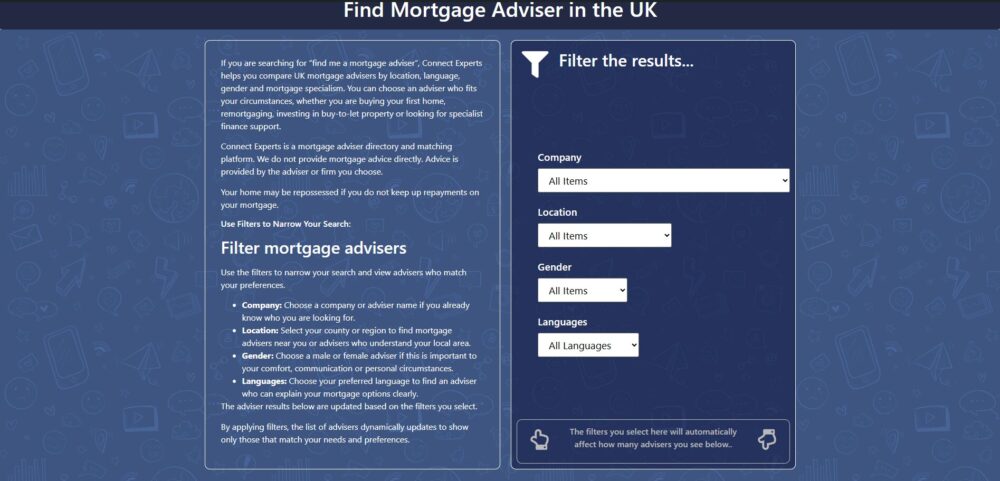
Connect Experts is the Connect Group’s directory and matching platform. It helps users search for advisers, including advisers associated with the Connect network and other associated authorised firms.
Businesses seeking support can use the directory to find a business loan adviser.
Connect Experts does not provide advice directly. Advice is provided by the adviser or firm selected by the user.
Frequently Asked Questions
What is a commercial loan?
A commercial loan is borrowing provided for a business purpose. It may be used for equipment, premises, working capital, expansion, refinancing or another defined commercial need.
Who can apply for a commercial loan?
Applications may be considered from limited companies, sole traders, partnerships, LLPs and other eligible business structures. Acceptance depends on lender criteria.
Is a commercial loan the same as a commercial mortgage?
No. A commercial mortgage is normally secured against commercial or mixed-use property. A commercial loan can cover a wider range of secured or unsecured business borrowing.
Are commercial loans regulated by the FCA?
Regulation depends on the borrower, product, security and purpose. Some commercial lending is not regulated by the Financial Conduct Authority. Advisers should establish the regulatory position of each case.
Can a business obtain a commercial loan with adverse credit?
It may be possible. Lenders may consider the age and seriousness of the credit issue, current business performance, available security and the proposed repayment plan.
Will directors need to provide personal guarantees?
Some lenders require personal guarantees, particularly for limited-company borrowing. The directors should understand the guarantee and obtain independent legal advice where required.
How long does a commercial loan application take?
Timescales depend on the lender, complexity, requested evidence and whether security must be valued. Complete documentation can help reduce delays.
What happens if the business cannot make the repayments?
Missed payments may result in charges, enforcement action and damage to the business’s credit record. Secured assets may be at risk, and guarantors may become personally liable under the guarantee.