

Independent mortgage brokers need more than access to mortgage products. They also need a reliable structure for compliance, research, client records, lender relationships and business continuity.
Independence does not always mean operating without support. In practice, it means retaining professional judgement and business direction while choosing the infrastructure that supports suitable advice.
At a Glance
- An independent mortgage broker is not necessarily directly authorised.
- Brokers can retain their own identity within an appointed representative structure.
- Direct authorisation gives a firm greater regulatory responsibility.
- A mortgage network can provide compliance oversight, lender access, systems and case support.
- The right structure should support client outcomes without removing the broker’s business identity.
What Is an Independent Mortgage Broker?
An independent mortgage broker generally advises across a range of available mortgage lenders rather than representing one lender alone.
However, the term can describe two different forms of independence.
The first concerns advice. The broker can research suitable mortgage options from the lenders available through their panel or operating structure.
The second concerns the business. The broker may control their brand, client relationships, working methods and plans for growth.
Neither definition automatically confirms the firm’s regulatory status. An independent broker may be directly authorised or operate as an appointed representative.
Independent Does Not Always Mean Directly Authorised
A directly authorised firm is authorised by the Financial Conduct Authority and carries direct responsibility for its regulatory framework.
This can include:
- Regulatory reporting.
- Professional indemnity arrangements.
- Compliance policies and controls.
- File monitoring.
- Financial promotion approval.
- Staff supervision.
- Complaint procedures.
- Data and record management.
- Lender and provider relationships.
An appointed representative operates under the regulatory responsibility and permissions of a principal firm.
The principal firm supervises the appointed representative and sets the framework within which regulated business can be conducted. The adviser must still provide suitable advice, keep appropriate records and follow the agreed process.
Our guide to joining a mortgage AR network explains this structure in more detail.
What Support Does an Independent Broker Need?
A broker may be independent in outlook while relying on shared infrastructure.
The support required will depend on the firm’s permissions, client base, advice areas and operating model.
Compliance controls
Mortgage advice must be researched, explained and recorded correctly. Brokers need clear processes for fact-finding, affordability, suitability, disclosures and client communication.
Reliable mortgage network compliance support can help advisers understand requirements before a case reaches the checking stage.
Compliance should not be treated as a final administrative step. It forms part of the advice process from the first client conversation.
Lender and provider access
A lender panel should reflect the business the broker intends to write.
A residential-only panel may not support clients who later need buy-to-let, bridging, commercial finance or second charge borrowing. Equally, a large panel has limited value when relevant products or placement support cannot be accessed efficiently.
Independent brokers should examine:
- The mortgage and protection areas covered.
- Any restrictions on particular lenders.
- Packaging or submission requirements.
- Support for cases outside standard criteria.
- Referral routes for business outside their permissions.
- How lender changes are communicated.
The technical value of a panel lies in its relevance, not only its size.
Technology and record keeping
Mortgage systems should provide a clear record of the client journey.
This may include:
- Customer relationship management.
- Fact-finding and document collection.
- Mortgage research records.
- Suitability documentation.
- Compliance checks.
- Case tracking.
- Commission reconciliation.
- Management information.
Technology should reduce repeated work without weakening human judgement. Automation can organise information, but it cannot replace the adviser’s responsibility for understanding the client.
Support for complex cases
Not every application fits standard lender criteria.
Income structures, property types, credit history, portfolio exposure and repayment plans can create technical questions. Placement support can help a broker test lender appetite before making a full submission.
This may reduce unsuitable applications, repeated research and unnecessary delays.
Can a Broker Remain Independent Within a Network?
An appointed representative may retain their trading identity, client relationships and business plans, subject to the principal firm’s agreement and regulatory controls.
The network does not provide the advice to the client. The adviser provides the advice while operating within the network’s permissions and supervision.
The commercial terms should make clear:
- Who owns and controls client data.
- How the firm may present its brand.
- Which permissions are available.
- How commissions are paid.
- What supervision applies.
- How financial promotions are approved.
- What happens to pipeline business after termination.
- Which records can be retained when leaving.
Independence is therefore not measured only by whether support exists. It is measured by whether the broker understands and accepts the structure behind that support.
Why Adviser Visibility Matters
Independent brokers also need a clear route through which potential clients can find them.
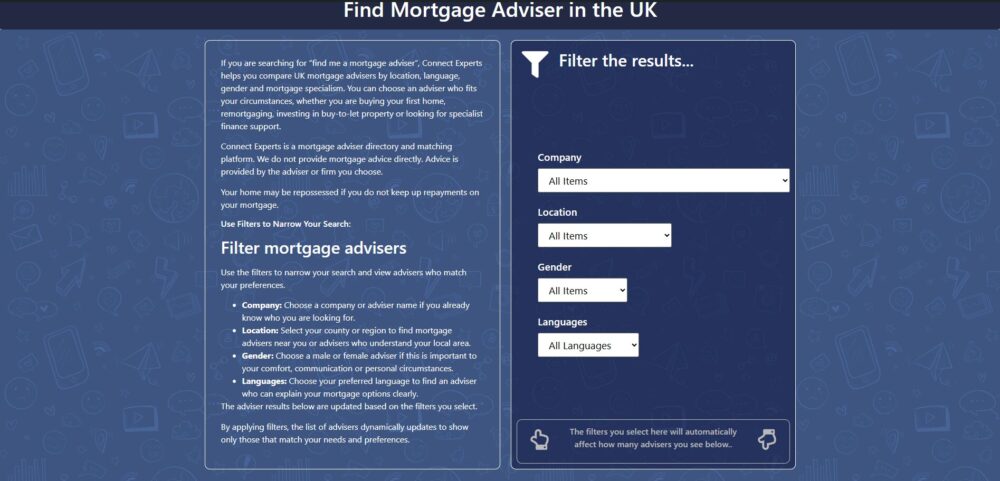
Connect Network members may be listed within Connect Experts, the group’s public adviser directory. Users can find a mortgage adviser by factors such as location, mortgage need, language and personal preference.
Connect Experts is a directory and matching platform. It does not provide mortgage advice directly. Advice is provided by the adviser or firm selected by the user.
This creates a practical connection between network membership and public adviser visibility.
What Should Brokers Compare?
Before choosing a regulatory or network structure, an independent broker should compare:
- Available regulatory permissions.
- Relevant lender and provider access.
- Compliance and supervision processes.
- Case-checking times.
- Technology and compulsory systems.
- Placement support.
- Training requirements.
- Commission arrangements.
- Total annual costs.
- Branding and client ownership terms.
- Notice periods and exit conditions.
- Opportunities for adviser visibility.
A complete mortgage network should be assessed as an operating structure, not simply a list of features.
The lowest fee may not produce the lowest cost. Slow processes, restricted permissions or unsuitable systems can consume time and prevent a broker from serving otherwise suitable clients.
Independence Requires Deliberate Structure
Independence gives a broker room to develop professional judgement, build client relationships and shape a business.
However, freedom without reliable processes can expose both the client and the firm to avoidable risk.
The practical question is not whether an independent broker should accept support. It is whether that support improves the quality, control and resilience of the advice business.
Experienced brokers considering their next regulatory or business structure can review the support available through Join Connect Network.
Frequently Asked Questions
What is an independent mortgage broker?
An independent mortgage broker advises clients using mortgage options available from a range of lenders rather than representing one lender alone. The precise scope depends on the broker’s lender access and regulatory permissions.
Is an independent mortgage broker directly authorised?
Not necessarily. An independent broker may be directly authorised or operate as an appointed representative of an authorised principal firm.
Can an appointed representative use their own brand?
An appointed representative may be able to use their own trading identity. The arrangement will depend on the network agreement and financial promotion requirements.
What does a mortgage network provide?
A mortgage network may provide regulatory supervision, compliance support, lender access, technology, training, case placement and business development services.
Does a mortgage network give advice to the client?
No. The mortgage adviser or adviser firm gives the advice. The network provides the regulatory and operational framework within which an appointed representative conducts regulated business.
What should an independent broker check before joining a network?
The broker should examine permissions, compliance processes, lender access, systems, fees, commission terms, branding rights, client ownership, notice periods and exit arrangements.