

How Mortgage Advisers Adapted to the 2023 Market: The mortgage market of 2023 tested how quickly advisers could interpret change and turn it into practical client support.
Rates moved, products were repriced and some lender offers had short availability periods. At the same time, household budgets were under pressure and Consumer Duty introduced clearer expectations around customer outcomes.
Success was therefore less about predicting the next rate movement. It depended on stronger research, accurate records and earlier communication.
At a Glance
Mortgage advisers responding effectively during 2023 generally focused on:
- checking lender criteria before recommending a product;
- preparing complete client files earlier;
- reviewing affordability against higher payments;
- contacting clients before fixed rates expired;
- documenting Consumer Duty outcomes;
- using network, compliance and lender support;
- maintaining client visibility without making rate predictions.
What Made the 2023 Mortgage Market Turbulent?
During 2023, changes in funding costs caused lenders to review pricing and product availability frequently.
A product identified during initial research could change before submission. Advisers therefore needed to confirm rates, fees, affordability rules and application deadlines at each important stage.
Borrowers also faced higher payments when older fixed-rate deals ended. This increased the importance of comparing:
- a new product from the existing lender;
- a remortgage with another lender;
- product fees and early repayment charges;
- affordability under the proposed payment;
- the total cost over the chosen deal period.
The most suitable rate was not always the lowest advertised rate. Fees, loan size, incentives and future plans could materially alter the overall cost.
Build the Case Before Selecting the Product
In a stable market, missing information may cause a delay. During rapid repricing, that delay can also cause a product to be withdrawn before an application is ready.
A stronger 2023 case-preparation process included:
- verified income evidence;
- current bank statements;
- accurate credit commitments;
- deposit evidence;
- property details;
- explanations for credit issues;
- landlord portfolio information where relevant;
- company documents for limited company borrowing.
A complete fact-find allowed advisers to research against the client’s actual circumstances rather than an assumed profile.
Where lender criteria were complex, access to wider adviser services could help identify packaging, referral or case-placement routes.
Check Criteria, Not Only Rates
Rate tables provided only part of the answer during 2023.
Advisers also needed to check:
- maximum loan-to-value;
- income multiples;
- affordability stress rates;
- acceptable employment history;
- treatment of bonuses and overtime;
- self-employed income calculations;
- property restrictions;
- adverse-credit limits;
- rental stress calculations;
- lender exposure limits.
Criteria could change independently of headline pricing. A technically suitable product therefore required both rate research and policy verification.
This became particularly important for self-employed applicants, portfolio landlords, unusual properties and clients with recent credit problems.
Contact Clients Before Their Fixed Rate Ends
Reactive remortgage conversations left less time to assess affordability or correct documentation gaps.
A structured client-retention process could begin several months before a fixed rate ended. Advisers could then:
- confirm the mortgage balance and maturity date;
- review income, expenditure and credit commitments;
- compare available product-transfer and remortgage routes;
- explain the effect of fees and repayment charges;
- record why the selected route suited the client.
Early contact did not mean predicting where rates would move. It gave the client enough time to make a considered decision.
Consumer Duty Changed the Evidence Required
The FCA’s Consumer Duty took effect for open products and services on 31 July 2023.
For mortgage intermediaries, this strengthened the need to demonstrate good customer outcomes. Advisers had to consider whether clients understood the recommendation, received suitable support and could pursue their financial objectives.
The practical effect extended beyond adding wording to a suitability report.
A strong file needed to show:
- why the recommendation met the client’s needs;
- how costs and risks were explained;
- whether the client understood the proposed payment;
- how foreseeable harm was considered;
- whether vulnerability affected the advice process;
- what support was provided before and after completion.
Mortgage intermediaries can review the FCA’s Consumer Duty guidance for mortgage firms for the regulatory expectations that applied during this period.
Use Technology to Strengthen Control
Technology was most useful when it reduced omissions rather than replacing adviser judgement.
Effective systems could help advisers:
- record client communications;
- monitor fixed-rate expiry dates;
- track outstanding documents;
- maintain research notes;
- follow compliance workflows;
- review conversion rates;
- identify inactive clients;
- monitor the case pipeline.
Good technology created a reliable record of what happened and when. It also allowed advisers to find problems before they affected the application.
However, automated communication still needed to be clear, accurate and appropriate for the client.
Maintain Competence as Products Change
The lessons learned at qualification could not cover every product or policy change encountered during 2023.
Relevant continuing development included:
- lender criteria updates;
- affordability assessment;
- Consumer Duty;
- vulnerable customers;
- product transfers;
- specialist buy-to-let;
- adverse-credit cases;
- protection discussions;
- financial-promotion rules.
Practical training and development for mortgage brokers helped advisers apply regulatory and product knowledge to active cases.
Learning had the greatest value when it changed the quality of research, documentation or client communication.
How a Mortgage Network Supported Adviser Resilience
A mortgage network could not remove market volatility. It could provide the structure needed to respond consistently.
Useful network support during 2023 included:
- lender and product updates;
- compliance guidance;
- file-checking support;
- case-placement assistance;
- mortgage technology;
- packaging and referral routes;
- adviser training;
- business-development support.
Connect’s mortgage-network compliance support combines regulatory guidance with lender access, technology and case support.
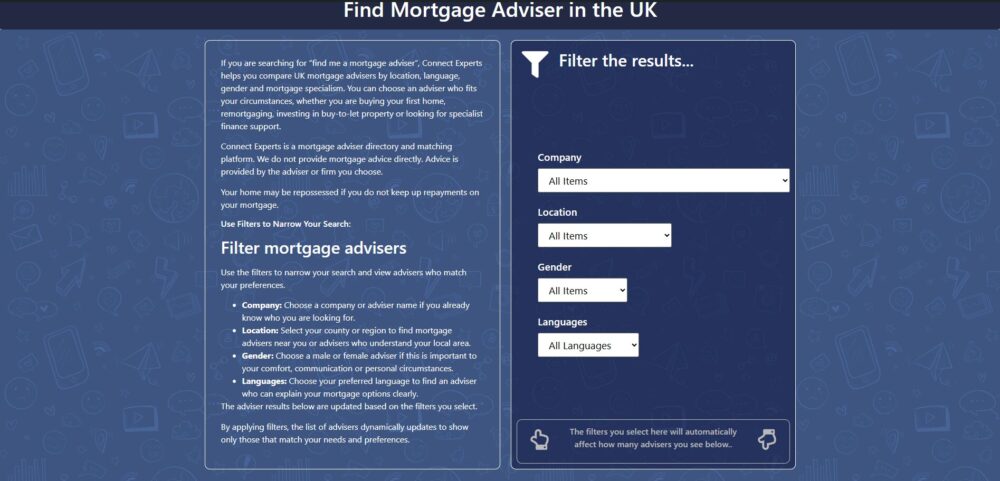
Network membership could also support adviser visibility. Connect network advisers and associated authorised firms may be listed through the Connect Experts mortgage adviser directory, subject to the applicable directory requirements.
What Did 2023 Teach Mortgage Advisers?
The central lesson was not that advisers needed to forecast the market perfectly.
They needed processes that remained dependable when the market was not.
Accurate information improved research. Early communication created more time. Complete files reduced avoidable delays. Clear records helped demonstrate suitable advice and good outcomes.
Market conditions changed quickly during 2023. The principles supporting reliable mortgage advice did not.
Join a Mortgage Network Built for Changing Markets
Connect for Intermediaries supports mortgage advisers across mainstream and specialist lending, compliance, technology, training and case placement.
Explore how to join Connect Network and review the support available to appointed representatives and mortgage firms.
Frequently Asked Questions
Why was the UK mortgage market turbulent in 2023?
Mortgage pricing, lender funding costs, affordability pressures and product availability changed frequently. Consumer Duty also introduced stronger outcome-based requirements for mortgage firms.
How could advisers reduce the effect of product withdrawals?
Advisers could prepare documents early, verify lender criteria before submission and explain that a product remained subject to availability until secured.
Why did Consumer Duty matter to mortgage advisers?
Consumer Duty required firms to act towards delivering good customer outcomes. Advisers needed to evidence suitability, customer understanding, appropriate support and consideration of foreseeable harm.
Could a mortgage network guarantee access to a particular rate?
No. Rates and products remained subject to lender criteria, availability and application requirements. A network could provide lender access, updates, compliance guidance and placement support.
What was the most important business lesson from 2023?
Reliable processes mattered more than market predictions. Early contact, accurate research, complete files and clear client communication gave advisers greater control during rapid change.