

How Mortgage Advisers Build Client Rapport: Mortgage advice begins with information, but information rarely arrives in a perfectly organised form.
Clients may explain their income clearly but overlook an upcoming career change. They may discuss their deposit while avoiding concerns about credit history. Others may understand the monthly payment but not the longer-term cost.
Client rapport helps an adviser uncover the complete picture.
It is not simply friendliness or small talk. It is a structured way of creating enough trust for an accurate and useful mortgage conversation.
At a Glance
Strong client rapport helps mortgage advisers gather better information and explain complex choices more clearly.
A practical approach includes:
- Setting expectations before the meeting
- Asking open and specific questions
- Listening without making assumptions
- Explaining technical terms in plain English
- Recording agreed actions accurately
- Providing updates when promised
- Checking the client has understood
Rapport should support the advice process. It should never replace evidence, suitability or accurate record-keeping.
What Is Client Rapport in Mortgage Advice?
Client rapport is the professional connection that allows a client and adviser to communicate openly.
It develops when the client feels heard, respected and able to ask questions. For the adviser, this can produce a clearer understanding of the client’s circumstances, priorities and concerns.
However, rapport does not mean agreeing with every client preference.
An adviser may need to challenge assumptions, explain affordability limits or discuss risks the client has not considered. Good rapport makes these conversations clearer and more constructive.
Why Rapport Supports the Mortgage Process
Mortgage applications can involve income evidence, expenditure, credit commitments, property details and future financial plans.
A missing detail can change which lenders or products may be considered.
Clients who feel uncomfortable may provide short answers or avoid sensitive subjects. This can leave gaps in the fact-find and create delays later.
A well-managed conversation can help the adviser understand:
- Why the client wants the mortgage
- How long they expect to keep the property
- Whether their income may change
- What level of payment feels manageable
- Which risks concern them most
- How much explanation they need
- Whether communication adjustments are required
The principle is simple. Better understanding supports better-quality information.
A Practical Client Rapport Process
1. Set Expectations Before the Meeting
Tell the client what the meeting will cover and which documents may be required.
Explain how long the meeting may take. Confirm whether it will be held by telephone, video or face-to-face.
Clear expectations reduce uncertainty before detailed financial questions begin.
2. Start With the Client’s Objective
Begin with the reason behind the enquiry rather than immediately discussing mortgage products.
Useful opening questions include:
- What are you hoping to achieve?
- Why is this important now?
- What concerns you most about the process?
- Have you received mortgage advice before?
These questions provide context for the technical fact-find that follows.
3. Use Open Questions Before Closed Questions
Open questions allow clients to explain their circumstances in their own words.
Closed questions can then confirm exact figures, dates and commitments.
For example, ask how the client’s income is structured before requesting specific payslip figures. This can reveal overtime, bonuses, commission or secondary income requiring further evidence.
4. Listen and Confirm
Active listening involves more than remaining silent.
Summarise important information and ask the client to confirm your understanding.
For example:
“You plan to remain in the property for at least five years, but you may change employment next year. Is that correct?”
This gives the client an opportunity to correct or expand the record.
5. Explain Without Unnecessary Jargon
Terms such as loan-to-value, affordability assessment and early repayment charge may be familiar to advisers. They may not be familiar to clients.
Explain each term when it becomes relevant.
Short explanations are usually more effective than giving every possible detail at once. Ask the client whether the explanation makes sense before moving forward.
6. Record Needs and Communication Preferences
Good rapport should produce reliable records.
Document the client’s objectives, concerns, relevant personal circumstances and preferred communication method. Record any agreed next steps and outstanding information.
Mortgage advisers working within a network should also follow the required advice and file-quality processes. Connect provides further information about its compliance and regulatory support.
7. Follow Up When Promised
Trust can be weakened when an adviser misses an agreed update.
A complete answer may not always be available immediately. However, a short progress update can show that the case remains active.
Client communication can be supported by suitable systems, reminders and case-management tools. The mortgage broker technology available through Connect can help advisers manage records and communication more consistently.
Building Rapport During Virtual Meetings
Virtual meetings require the same professional structure as face-to-face appointments.
Advisers should:
- Test the connection before the appointment
- Use a quiet and private setting
- Look towards the camera when speaking
- Pause after important explanations
- Share documents in a readable format
- Confirm that the client can hear and understand
- Summarise actions before ending the call
Convenience should not reduce the quality of the conversation or the accuracy of the record.
Rapport, Trust and Adviser Choice
Clients may feel more comfortable with an adviser who understands their location, language, communication needs or mortgage circumstances.
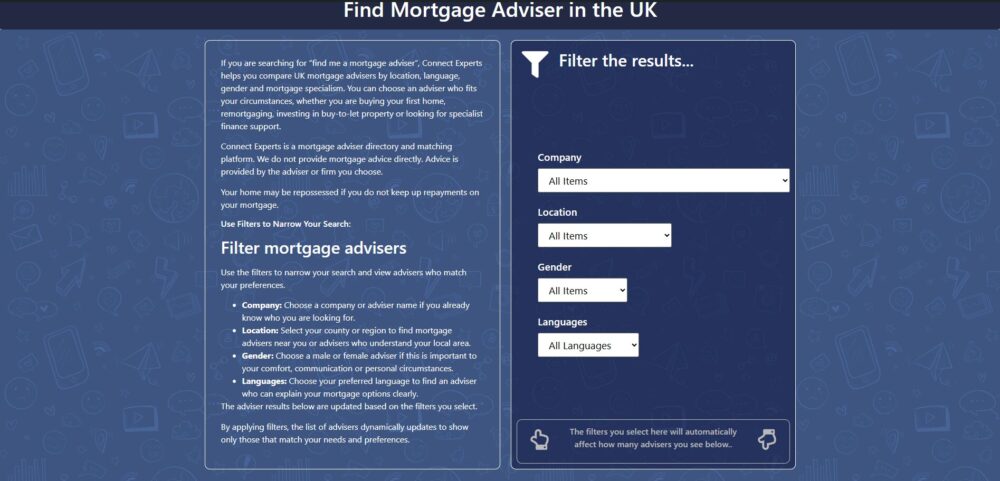
Connect Experts allows consumers to find a mortgage adviser using practical search filters. Advisers listed there are part of the Connect network or associated authorised firms.
This directory connection can help Connect network members become more visible to consumers seeking suitable advice.
How Connect Supports Adviser Development
Rapport is a professional skill that improves through observation, feedback and repeated practice.
Training can help advisers improve meeting structure, questioning techniques, explanations and record quality. Connect provides training and development for mortgage brokers at different stages of their careers.
The aim is not to create a scripted personality. It is to help advisers hold clearer, more useful and better-documented conversations.
Frequently Asked Questions
How quickly can a mortgage adviser build rapport?
Rapport can begin during the first conversation. Lasting trust usually develops through clear explanations, accurate actions and dependable follow-up.
Is rapport more important than mortgage knowledge?
No. Advisers need both. Rapport supports communication, while technical knowledge and evidence support the advice process.
Can rapport improve the fact-find?
Yes. Clients who feel heard may provide fuller information about their circumstances, objectives and concerns. Advisers must still verify relevant information.
How can an adviser maintain rapport after completion?
Keep accurate review dates and contact the client when a relevant mortgage milestone approaches. Communication should remain useful, proportionate and properly managed.
Join Connect Network
Connect supports mortgage advisers through compliance guidance, training, technology, lender access and business development resources.
Learn more about joining Connect Network and the support available to mortgage and protection advisers.