

Financial Mortgage Advisers: A mortgage recommendation considers how a client can finance a property. Protection advice considers what could happen if the income supporting that mortgage changes.
For financial mortgage advisers, these subjects are closely connected. A suitable mortgage may remain affordable today. However, illness, injury or death could place future repayments under pressure.
The technical task is not to assume every client needs the same policy. It is to identify relevant risks, explain suitable options and record the conversation clearly.
At a Glance
- Mortgage and protection needs should be considered together.
- Advisers should assess income, debts, dependants and existing cover.
- Protection recommendations must reflect the client’s circumstances.
- Clients should understand policy limits, exclusions and underwriting.
- Where advice is declined, the discussion and decision should be recorded.
- Network support can help advisers maintain consistent processes.
Why Protection Forms Part of Mortgage Advice
A mortgage can become one of a household’s largest financial commitments. Its affordability often depends on continued earnings from one or more borrowers.
Protection discussions help advisers examine what might happen if those earnings stop or a borrower dies.
The FCA’s Consumer Duty came into force for open products and services on 31 July 2023. It introduced a stronger focus on customer understanding, foreseeable harm and good outcomes. Its purpose was not to require every client to buy protection. It required firms to consider customer needs and communicate material risks clearly.
Advisers can read more about the practical requirements in our guide to Consumer Duty for mortgage advisers.
The principle is straightforward. Advice should not only explain how a mortgage starts. It should also consider how the household might manage if circumstances change.
What Should Financial Mortgage Advisers Assess?
A protection review should begin with the client’s financial position rather than a specific product.
The fact-find may consider:
- The outstanding mortgage and repayment method.
- The remaining mortgage term.
- Household income and essential expenditure.
- Dependants and childcare responsibilities.
- Employment status and employer benefits.
- Available savings and emergency funds.
- Existing personal or workplace policies.
- Health, occupation and lifestyle information.
- The financial effect of death or long-term absence from work.
These details help the adviser identify possible protection gaps. They also support a clear explanation of why a recommendation may or may not be suitable.
Main Protection Options
Life Insurance
Life insurance can pay a lump sum when the insured person dies during the policy term.
The amount and term may be considered alongside the mortgage balance, other debts and the needs of surviving dependants. Advisers should explain whether the benefit is level, decreasing or increasing.
Critical Illness Cover
Critical illness cover can pay a lump sum following the diagnosis of a condition covered by the policy.
Definitions, severity requirements and covered conditions vary. Therefore, clients should not assume that every diagnosis will result in a claim.
The benefit could help reduce mortgage debt, fund household costs or support changes needed during recovery.
Income Protection
Income protection is designed to replace part of a person’s earnings when illness or injury prevents them from working.
The adviser should explain:
- The percentage of income covered.
- The deferred period before payments begin.
- The maximum payment period.
- The policy’s definition of incapacity.
- How employer sick pay may affect the recommended structure.
This can be particularly relevant for self-employed clients or people with limited workplace benefits.
Family Income Benefit
Family income benefit normally pays a regular benefit rather than one lump sum.
It may suit households that want to replace part of an income for a defined period. However, the reducing remaining term should be explained carefully.
Why Accurate Disclosure Matters
Protection applications commonly require information about health, occupation, lifestyle and medical history.
Clients should answer each question fully and accurately. Missing or incorrect information could affect underwriting, policy terms or a future claim.
Advisers should avoid interpreting a medical question for the client. Instead, they should encourage the client to provide complete information and ask the insurer for clarification where necessary.
The objective is not simply to submit an application. It is to create a policy that can operate as expected when it is needed.
Explaining Cost and Value
Price should not be discussed in isolation.
Premiums can depend on:
- Age.
- Health and medical history.
- Smoking status.
- Occupation.
- Benefit amount.
- Policy term.
- Deferred period.
- Additional policy features.
A lower premium does not automatically indicate better value. Definitions, exclusions, guarantees and benefit periods can materially affect the cover provided.
Advisers should compare suitable policy structures before discussing affordability with the client.
Recording the Protection Conversation
A clear file should show:
- Which risks were identified.
- What existing cover was considered.
- Which options were explained.
- How the recommendation was reached.
- Which exclusions or limitations were discussed.
- Whether the client accepted, postponed or declined advice.
A client may decide not to proceed. That decision does not remove the need for a clear conversation and an accurate record.
Sensitive subjects also require careful communication. Our article on building client rapport for mortgage advisers explains how clear language can support difficult financial discussions.
How Network Support Helps Advisers
Consistent protection advice requires more than access to insurance providers.
A mortgage and protection network can support advisers through:
- Training and product updates.
- Compliance guidance.
- Structured fact-finding.
- Suitability and file-review processes.
- Referral routes where permissions differ.
- Provider access and case support.
- Ongoing competence monitoring.
Connect for Intermediaries is a mortgage network with adviser support across mortgage, protection and specialist finance.
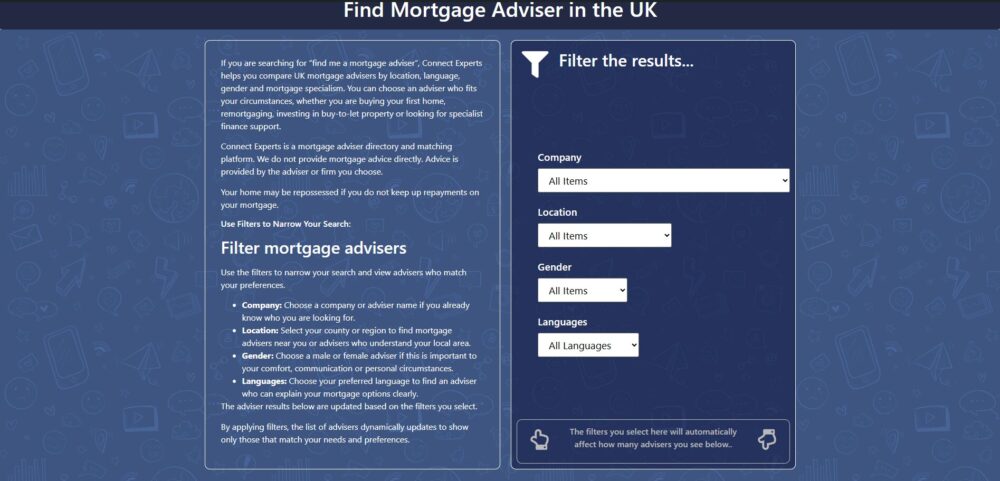
The wider Connect Group also includes Connect Experts, an adviser directory where consumers can find protection mortgage brokers based on their needs.
Advisers reviewing their current network arrangements can explore how to join Connect Network.
FAQs About Financial Mortgage Advisers and Protection
Do mortgage advisers have to recommend protection?
Not every mortgage client will receive a protection recommendation. Advisers should assess the client’s needs, explain relevant risks and act within their regulatory permissions.
Should protection be discussed before mortgage completion?
Protection should be raised early enough for the client to consider the options properly. Underwriting and medical evidence can take time.
What happens when a client declines protection?
The adviser should record the risks discussed, the options explained and the client’s decision. The conversation may be reviewed later if circumstances change.
Can every mortgage adviser arrange protection?
No. Permissions and business models differ. Advisers should only provide advice within their authority and use an approved referral process where required.
Why should existing workplace cover be reviewed?
Employer benefits may be limited, linked to continued employment or insufficient for the mortgage and wider household needs.
Supporting Advice Beyond the Mortgage
Good mortgage advice explains how a client can borrow. Good protection advice examines how that commitment may remain manageable when life changes.
The value lies in connecting both questions without assuming the answer.
For financial mortgage advisers, a structured protection discussion supports clearer decisions, stronger evidence and more complete customer outcomes.