
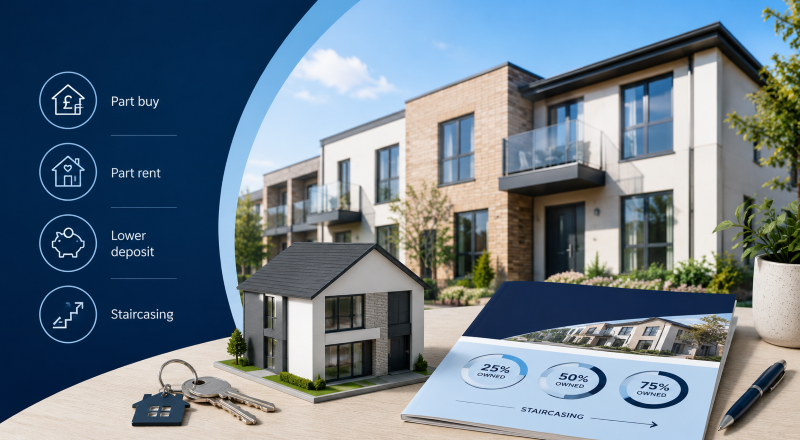
Shared Ownership Mortgages: Shared Ownership allows someone to buy part of a home and pay rent on the remaining share.
The buyer normally funds their share with a mortgage, savings or a combination of both. A housing association or another approved provider retains the remaining interest.
This structure can reduce the mortgage and deposit needed at the start. However, affordability depends on the complete monthly cost, not the mortgage payment alone.
At a Glance
A Shared Ownership buyer purchases a percentage of a property and pays rent on the part they do not own.
The buyer may also pay service charges, estate charges, insurance contributions and lease-related fees. A lender assesses the mortgage against the share being purchased, while the housing provider completes a separate affordability assessment.
The arrangement can offer a route into homeownership. However, buyers should understand the lease, future rent changes and staircasing costs before proceeding.
What Is a Shared Ownership Mortgage?
A Shared Ownership mortgage finances the percentage of the property being purchased.
For example, consider a home with a full market value of £300,000. If the buyer purchases a 40% share, the price of that share is £120,000.
A 5% deposit against the purchased share would be £6,000. Subject to affordability and lender criteria, the required mortgage would then be £114,000.
The deposit is normally based on the share being purchased rather than the property’s full market value. However, lender requirements differ.
The buyer then pays rent to the housing provider on the remaining 60%.
Readers seeking a broader explanation of eligibility and applications can review the Shared Ownership Scheme.
How the Monthly Costs Are Structured
Shared Ownership should not be assessed using the mortgage payment in isolation.
The regular costs may include:
- mortgage repayments
- rent on the unowned share
- service charges
- estate management charges
- buildings insurance contributions
- repairs and maintenance
- council tax
- utilities
- lease administration charges
Service charges can be significant, particularly for flats and developments with communal spaces. Buyers should request the current charges and ask whether major works are planned.
Official Shared Ownership guidance from GOV.UK explains buying, ongoing costs, repairs, staircasing and selling. Scheme and lease conditions can differ between homes.
How Lenders Assess Affordability
A Shared Ownership application includes more than a conventional mortgage affordability calculation.
A lender may consider:
- earned and other acceptable income
- credit commitments
- household expenditure
- the proposed mortgage payment
- rent on the remaining share
- service and estate charges
- the mortgage term
- the applicant’s credit history
- the property and lease terms
The housing provider may also complete its own assessment. It may expect the buyer to purchase the largest share they can reasonably afford.
Passing the housing provider’s assessment does not guarantee mortgage approval. Similarly, a lender agreement in principle does not guarantee acceptance by the housing provider.
The FCA treats the relevant loan-to-value calculation as applying to the share secured by the mortgage, rather than automatically using the property’s total market value.
What Advisers Should Check
Shared Ownership cases require the adviser to understand both the borrower and the leasehold structure.
Important checks include:
- the percentage being purchased
- the property’s full market value
- the required deposit
- rent on the unsold share
- current service charges
- anticipated charge increases
- lease length
- staircasing restrictions
- resale conditions
- housing provider requirements
- lender acceptance of the property and lease
- whether the property is new-build or resale
The adviser should also establish whether the mortgage remains affordable if rent, service charges or household costs rise.
A low starting deposit does not always mean a low overall housing cost.
What Is Staircasing?
Staircasing means purchasing further shares in the property.
For example, an owner with a 40% share may later buy another 10%, taking their ownership to 50%. Their rent should then reduce because the housing provider owns a smaller percentage.
The cost of the additional share is normally based on the property’s market value when the staircasing takes place, not its original purchase price.
The owner may also need to pay for:
- a property valuation
- legal work
- mortgage advice
- mortgage product fees
- housing provider administration
- Stamp Duty Land Tax, where applicable
Some leases permit staircasing to 100%. Others contain restrictions, particularly in protected rural locations or specialist developments.
The lease and Key Information Document should confirm the applicable rules.
Can a Shared Ownership Mortgage Be Remortgaged?
A Shared Ownership owner may be able to remortgage their existing share.
Common reasons include:
- replacing an expiring fixed rate
- changing lender
- altering the mortgage term
- buying additional shares
- reviewing monthly payments
The housing provider’s consent may be required. The new lender must also accept the lease and Shared Ownership arrangement.
Where remortgaging and staircasing happen together, the lender must assess the increased share, revised loan and remaining rent.
Early repayment charges and legal costs should form part of the comparison.
Selling a Shared Ownership Home
The lease normally sets out how the property can be sold.
The housing provider may have an initial period in which it can nominate a buyer. A valuation from an approved surveyor may also be required.
If the provider does not find a buyer during the nomination period, the owner may be allowed to market the property more widely.
Possible selling costs include:
- valuation charges
- legal fees
- estate agency fees
- housing provider administration charges
- mortgage repayment costs
- leasehold information fees
The seller usually receives the value of the share they own, less mortgage debt and selling costs.
Property values can rise or fall. Shared Ownership does not remove normal housing market risk.
Is Shared Ownership Suitable for Every Buyer?
Shared Ownership may suit someone who cannot currently afford a suitable property through a conventional purchase.
However, it is not automatically cheaper than buying outright or continuing to rent.
A buyer should consider:
- the combined monthly cost
- how rent may change
- future service charges
- repair responsibilities
- restrictions within the lease
- the cost of buying more shares
- how the property may be sold
- whether the arrangement supports future plans
The central question is not simply whether the initial share is affordable. It is whether the complete arrangement remains manageable over time.
The Role of a Mortgage Adviser
A mortgage adviser can compare eligible lenders and assess how different providers treat the deposit, lease, property and monthly charges.
Advice may be particularly useful where the applicant has:
- variable or self-employed income
- previous credit problems
- a small deposit
- several financial commitments
- a new-build property
- plans to staircase
- a short or unusual lease
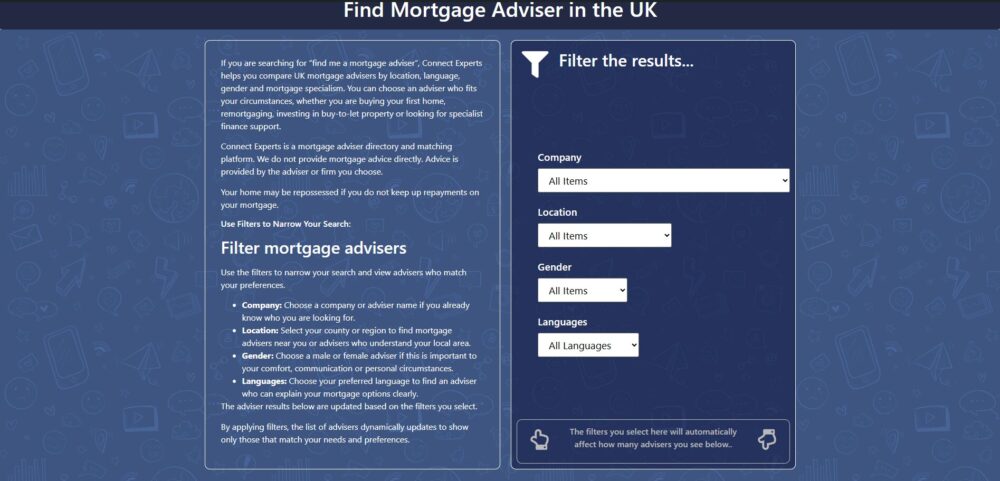
Consumers can use the Connect Experts directory to find a mortgage adviser by location and mortgage need. Connect Experts is a directory and does not provide mortgage advice directly. Advice is provided by the selected adviser or firm.
Shared Ownership Knowledge Within a Mortgage Network
For appointed representatives, Shared Ownership cases can require access to lender criteria, compliance guidance and experienced placement support.
A network can help advisers understand where a case fits, identify potential lease concerns and present the application correctly.
Connect provides network support across mainstream and specialist mortgage areas, subject to adviser experience, permissions and approval. Learn more about its mortgage network for advisers.
Connect appointed representatives can also receive a profile within the Connect Network adviser directory. This gives consumers another way to discover advisers by location and expertise.
Shared Ownership Mortgage FAQs
Is Shared Ownership only for first-time buyers?
No. Previous homeowners may qualify if they no longer own another property and cannot afford a suitable home on the open market. The housing provider must confirm eligibility.
Is the deposit based on the full property price?
It is usually calculated against the share being purchased. The lender decides the minimum acceptable deposit.
Do owners pay rent and a mortgage?
Usually, yes. The mortgage covers the purchased share. Rent is paid to the housing provider on its remaining share.
Can an owner buy the remaining share later?
Many leases allow further shares to be purchased through staircasing. Limits and procedures depend on the individual lease.
Who pays for repairs?
Responsibilities depend on the lease and property type. Buyers should not assume that repair costs are divided according to ownership percentages.
Can a Shared Ownership property fall in value?
Yes. The value of the buyer’s share can rise or fall with the wider property market.
Is mortgage advice required?
The precise process depends on the housing provider. However, mortgage advice can help the buyer compare lender criteria and understand the complete cost of the arrangement.
Important Information
Shared Ownership rules, lender criteria and lease conditions can change. Buyers should obtain mortgage advice and independent legal advice before committing to a purchase.
Your home may be repossessed if you do not keep up repayments on your mortgage.
Failure to pay rent or other charges due under the lease may also place the home at risk.