
How Mortgage Broking Changed in 2023: Mortgage broking changed significantly during 2023.
Higher borrowing costs affected affordability. Lender criteria moved quickly, while clients expected faster updates and clearer explanations.
At the same time, digital systems became a larger part of the advice process. These conditions did not remove the need for mortgage advisers. Instead, they changed how an effective advice business needed to operate.
At a Glance
Mortgage brokers did not need to replace personal advice with technology in 2023. They needed to combine professional judgement with stronger systems.
The main changes involved:
- more detailed affordability discussions;
- faster monitoring of lender criteria;
- digital fact-finding and document collection;
- clearer communication records;
- broader specialist lending knowledge;
- greater focus on compliance evidence;
- early, controlled use of artificial intelligence.
The principle was simple. Technology could support the process, but the adviser remained responsible for the advice.
Why Mortgage Broking Changed in 2023
Mortgage advisers worked within a more demanding environment during 2023.
Changes in mortgage pricing meant clients often needed to reconsider their budgets, product choices and future payment expectations. Applications that once appeared straightforward could require more detailed investigation.
A broker therefore needed to understand more than the headline mortgage rate. Important factors included:
- affordability stress testing;
- committed expenditure;
- income type and stability;
- deposit source;
- credit history;
- property construction;
- proposed ownership structure;
- lender-specific underwriting criteria.
This placed greater importance on research, case preparation and accurate client records.
Digital Processes Became Part of Good Advice
Technology was no longer limited to mortgage sourcing.
During 2023, advisers increasingly used customer relationship management systems, digital identity checks, electronic document collection and remote meetings.
Effective mortgage broker technology could help an adviser:
- record client information consistently;
- track outstanding documents;
- maintain an auditable communication history;
- manage review and renewal dates;
- reduce repeated administration;
- identify delays before they affected an application.
However, automation did not remove the need for judgement.
A system could organise information or identify missing data. It could not take responsibility for understanding the client’s objectives, assessing suitability or explaining the consequences of a recommendation.
The technical process and the human conversation had to work together.
Artificial Intelligence Was an Emerging Tool
Artificial intelligence became more visible across financial services during 2023.
Its practical use for mortgage firms was still developing. Possible applications included summarising internal information, preparing administrative drafts and helping teams search large sets of guidance.
Any use required control.
Mortgage firms still needed to consider:
- the accuracy of generated information;
- client confidentiality;
- data protection;
- record keeping;
- human review;
- regulatory responsibility;
- the risk of invented or incomplete answers.
AI could assist research and administration. It could not replace regulated advice or the adviser’s responsibility for the final recommendation.
Specialist Knowledge Became More Important
Some clients no longer fitted a simple high-street lending profile.
Self-employed income, adverse credit, limited company borrowing, portfolio buy-to-let and unusual property types could all require more detailed lender research.
This increased the value of specialist knowledge. It also increased the importance of knowing when to seek support.
A broker did not need to advise in every area. However, they needed a reliable process for recognising a case outside their experience or permissions.
That process could include specialist placement assistance, packaging support or an appropriate referral route.
Compliance Needed Better Evidence
Good advice depends on more than reaching a suitable result. The file should show how that result was reached.
A stronger 2023 advice record could include:
- the client’s objectives and priorities;
- the options considered;
- relevant affordability information;
- lender criteria reviewed;
- reasons alternatives were discounted;
- identified risks and limitations;
- the explanation provided to the client;
- confirmation of the agreed next steps.
Digital systems could make this evidence easier to organise. They could not correct weak reasoning or incomplete fact-finding.
Continued learning also remained important. Structured CPD for mortgage advisers could help advisers respond to lender changes, regulation and developing technology.
Online Visibility Became Part of the Adviser Model
Clients increasingly researched advisers before making contact.
An accurate website, clear adviser profile and genuine customer reviews could help people understand an adviser’s location, services and experience.
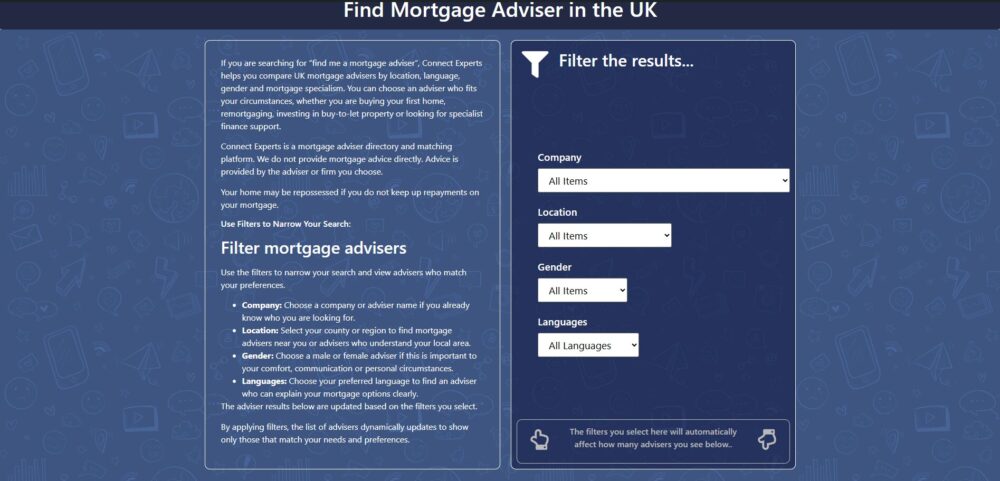
Connect Network advisers may also be listed through the Connect Group’s consumer-facing directory. Consumers can use Connect Experts to find a mortgage adviser by factors such as location, language and mortgage type.
The directory does not provide mortgage advice directly. Advice is provided by the adviser or firm selected by the customer.
This distinction is important. Digital visibility can help a client find an adviser, but it does not replace the advice process.
A Practical Operating Model for Mortgage Brokers
By October 2023, an effective mortgage advice business needed several connected processes.
These included:
- a reliable client management system;
- documented fact-finding;
- secure document collection;
- regular lender criteria research;
- defined compliance checks;
- structured client updates;
- specialist case support;
- planned CPD;
- clear online adviser information;
- review and renewal follow-ups.
No single tool could deliver all these outcomes.
The stronger model combined systems, knowledge and human judgement. Technology reduced avoidable administration, while the adviser concentrated on interpretation, explanation and suitability.
How a Mortgage Network Could Support Change
Independent development could be difficult when technology, compliance and lender criteria were changing at the same time.
A mortgage network could provide structure through compliance guidance, training, technology, case placement and business development support.
Connect Network provides support for UK mortgage advisers working across mainstream and specialist mortgage markets.
The purpose of that support is not to remove an adviser’s responsibility. It is to provide the systems and knowledge needed to exercise that responsibility consistently.
The Lasting Lesson From 2023
Mortgage broking did not become less human during 2023. Its systems became more technical.
Clients still needed advisers to ask careful questions, interpret complex criteria and explain financial decisions clearly.
The practical lesson was not that brokers had to abandon their established values. They had to build better processes around them.
Technology could improve speed. Data could improve oversight. Training could improve competence.
Trust still depended on the quality of the advice.