
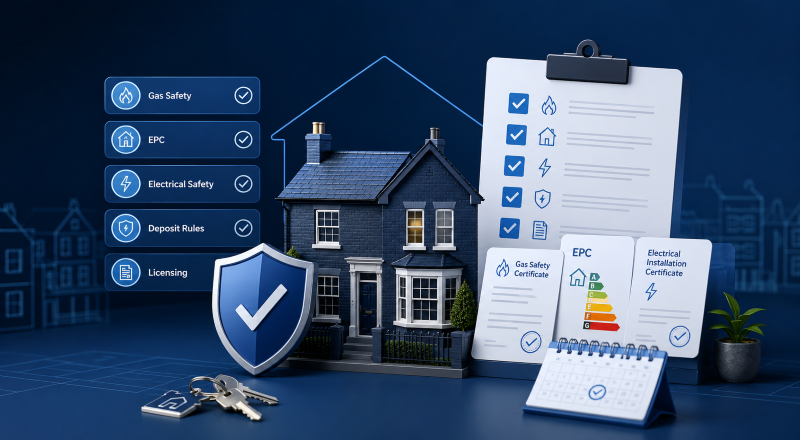
Landlord Compliance Checklist for England 2025: Landlord compliance is not one isolated certificate or annual check. It is a connected record of property safety, tenant documentation, licensing and ongoing maintenance.
For mortgage advisers, these records may also provide useful context during a buy-to-let application. A missing licence, unsuitable tenancy arrangement or unresolved safety issue can affect valuation comments, lender questions and application timescales.
This guide covers the principal requirements applying to private landlords in England as at 30 September 2025. Different rules apply in Scotland, Wales and Northern Ireland.
Before letting a property in England, landlords should check gas and electrical safety, EPC requirements, alarms, Right to Rent, deposit protection and local licensing. Records should remain current throughout the tenancy. Mortgage advisers should also identify compliance issues that may affect lender or valuer requirements.
What Is Landlord Compliance?
Landlord compliance means meeting the legal and regulatory duties connected with letting and managing residential property.
These duties may include:
- maintaining a safe and habitable property;
- obtaining required safety inspections;
- protecting tenancy deposits;
- giving tenants prescribed documents;
- completing Right to Rent checks;
- meeting local licensing conditions;
- keeping evidence of repairs and inspections.
The exact requirements depend on the property, tenancy type, occupiers and local authority area.
Landlords should therefore check both national rules and local council requirements. GOV.UK provides a broader overview of landlord responsibilities in England.
Why Compliance Matters to Mortgage Applications
A mortgage application and a landlord’s legal obligations are separate matters. However, the two can overlap.
A lender or valuer may need to understand:
- how the property will be occupied;
- whether an HMO licence is required;
- whether planning consent is needed;
- whether the proposed tenancy meets lender conditions;
- whether serious safety or repair issues affect the property;
- whether the rental arrangement matches the mortgage product.
For example, a standard single-let mortgage may not be suitable for a licensed HMO. Similarly, an unlicensed property could create legal and lender concerns.
Our buy-to-let mortgage guide explains how rental income, property type and landlord experience may affect lender assessment.
Pre-Tenancy Landlord Compliance Checklist
Before a tenant moves in, the landlord should confirm that the property is safe, lawful and supported by the required records.
Gas Safety
Gas appliances, pipework and flues supplied by the landlord must be maintained safely.
A Gas Safe registered engineer must normally complete a gas safety check every 12 months. The tenant must receive the relevant record before moving in or within the required period following a later inspection.
Electrical Safety
Electrical installations in privately rented homes in England must normally be inspected and tested by a qualified person at least every five years.
The landlord must give the tenant a copy of the Electrical Installation Condition Report. Required remedial work must be completed within the applicable period.
Energy Performance Certificate
Most rental properties require a valid Energy Performance Certificate.
In September 2025, privately rented properties generally needed an EPC rating of E or above unless a valid exemption applied. The tenant should receive the certificate before the tenancy begins.
Smoke and Carbon Monoxide Alarms
A smoke alarm is normally required on every storey used as living accommodation.
A carbon monoxide alarm is required in rooms containing a fixed combustion appliance, subject to the applicable rules. Landlords must repair or replace faulty alarms after being informed that they are not working.
Right to Rent
Right to Rent checks apply to prospective adult occupiers in England.
The landlord or authorised agent must complete the appropriate check before the tenancy starts. Evidence should be retained securely for the required period.
Property Licensing
The landlord should check whether the property requires:
- mandatory HMO licensing;
- additional HMO licensing;
- selective licensing;
- planning permission for its intended use.
Local rules can vary significantly. Our HMO licensing guide explains how licensing can interact with property use and mortgage applications.
Documents to Provide at the Start of a Tenancy
The required documents depend on the tenancy and property. For a typical assured shorthold tenancy in England during September 2025, the landlord would usually need to consider:
- a written tenancy agreement;
- the current How to Rent guide;
- a valid EPC;
- a gas safety record where gas is present;
- the electrical inspection report;
- deposit protection information;
- prescribed deposit information;
- licensing information where applicable.
A tenancy deposit normally had to be protected in a government-approved scheme within 30 days of receipt. The landlord also had to give the tenant the prescribed information within that period.
Missing records could restrict the landlord’s ability to use certain possession procedures and could lead to financial penalties or deposit claims.
Ongoing Duties During the Tenancy
Compliance continues after the tenant moves in.
Repairs and Property Condition
Landlords must keep the structure, exterior and key installations in repair. Properties must remain fit for human habitation and free from serious hazards.
Reports from tenants should be recorded, assessed and addressed within an appropriate period.
Inspections
Periodic inspections can help identify repairs, damp, safety concerns or unauthorised changes in occupation.
There is no single statutory inspection interval for every property. Inspections must be reasonable, respect the tenant’s right to quiet enjoyment and follow the required notice arrangements.
Record Keeping
Landlords should retain organised evidence, including:
- inspection reports;
- safety certificates;
- repair invoices;
- tenant communications;
- deposit records;
- licensing documents;
- alarm testing records;
- inventories and photographs.
Good records do not replace compliance. However, they help demonstrate when checks and repairs were completed.
Changes in Occupation
A change in the number or relationship of occupiers may alter the property’s HMO status.
This can affect licensing, planning and mortgage requirements. Advisers dealing with shared accommodation can review our HMO mortgage guide.
End-of-Tenancy Compliance
Final Inspection
The final inspection should compare the property against the original inventory and check-in evidence.
Any proposed deposit deductions should be reasonable, evidenced and account for fair wear and tear.
Deposit Return
Once deductions have been agreed, the deposit should normally be returned within ten days.
Disputed amounts should remain protected while the deposit scheme’s dispute process is followed.
Safety Checks Before Re-Letting
Before accepting another tenant, the landlord should review:
- gas certificate expiry dates;
- electrical report validity;
- EPC validity;
- alarm operation;
- licence conditions;
- repairs identified during the previous tenancy.
A certificate may still be valid, but changes to the property or its condition may require further action.
Section 21 Position in September 2025
As at 30 September 2025, Section 21 remained part of the possession process in England.
A landlord generally needed to meet relevant deposit, safety and document requirements before serving a valid notice. The Renters’ Rights Bill was still progressing through Parliament at that date and had not yet become law.
Landlords should obtain current legal guidance before starting possession proceedings.
Compliance Issues in Complex Buy-to-Let Cases
Some properties require more detailed checks than a standard single let.
These may include:
- HMOs;
- multi-unit freehold blocks;
- holiday lets;
- serviced accommodation;
- properties with mixed residential and commercial use;
- larger landlord portfolios;
- properties owned through limited companies.
Lender criteria, licensing and planning rules may not always use identical definitions. A property might meet one lender’s HMO definition even where mandatory HMO licensing does not apply.
Our guide to complex buy-to-let mortgages explains how property structure and occupation can affect lender selection.
Landlord Compliance and Mortgage Advice
Mortgage advisers do not replace solicitors, letting agents, local authorities or safety professionals.
However, advisers can help landlords understand which property and tenancy details a lender may examine. Early identification of licensing or occupation issues may reduce avoidable delays.
Landlords looking for mortgage advice can compare buy-to-let mortgage brokers through Connect Experts.
Those buying their first rental property can also search for first-time landlord mortgage brokers with relevant experience.
Connect Experts is part of the Connect Group and provides a directory of advisers from Connect network firms and associated authorised businesses. Mortgage advice is provided by the adviser or firm selected by the customer.
Landlord Compliance FAQs
What certificates does a landlord normally need?
Depending on the property, a landlord may need a gas safety record, electrical inspection report and EPC. Licensing documents may also be required.
How often is a gas safety check required?
Landlord-supplied gas appliances and flues generally require a safety check every 12 months by a Gas Safe registered engineer.
How often is an electrical inspection required?
Electrical installations in privately rented homes in England must normally be inspected at least every five years.
Does every HMO require a licence?
No. Large HMOs require mandatory licensing, while councils may operate additional licensing schemes covering smaller HMOs. Landlords should check with the relevant council.
Can missing compliance documents affect a mortgage?
Potentially. Lenders and valuers may raise questions about licensing, property condition, occupation or tenancy arrangements. Requirements vary by lender.
Is this guide legal advice?
No. This is general information based on rules applying in England on 30 September 2025. Landlords should obtain legal, tax, safety and local authority guidance where required.