

HMO Mortgage Case Assessment: An HMO mortgage case is rarely determined by rental income alone. The property, tenants, licence, planning position, valuation and landlord experience must form one coherent application.
For mortgage advisers, the first task is therefore not finding a product. It is establishing what the property is, how it will operate and whether the evidence supports the proposed borrowing.
At a Glance
An HMO mortgage application may require more detailed assessment than a standard buy-to-let case.
Advisers should establish:
- how many tenants and households will occupy the property;
- whether mandatory or additional licensing applies;
- whether planning permission or Article 4 restrictions are relevant;
- how the lender will assess rental income;
- whether the applicant has suitable landlord experience;
- whether the valuation will use standard or investment methodology;
- what documents must be obtained before submission.
Early case assessment can reduce unsuitable applications, delayed valuations and avoidable lender declines.
What Makes a Property an HMO?
A house in multiple occupation usually contains at least three tenants who form more than one household and share facilities.
Examples include:
- student houses;
- professional house shares;
- properties let under separate room agreements;
- converted houses with shared kitchens or bathrooms;
- larger properties occupied by five or more people.
A property occupied by five or more people from two or more households will generally fall within mandatory HMO licensing rules in England. Local councils can also introduce additional licensing for smaller HMOs.
Advisers should not assume that a smaller property falls outside local licensing requirements. The applicant should confirm the position with the relevant council before the mortgage application proceeds.
Why HMO Classification Matters to Lenders
An HMO can present different risks from a conventional single-family let.
The lender may assess:
- the number of lettable rooms;
- the tenancy structure;
- shared facilities;
- local rental demand;
- room sizes;
- fire and safety arrangements;
- the licence position;
- the landlord’s management experience;
- the property’s resale market.
A standard buy-to-let product may not permit HMO use. The intended occupancy should therefore be disclosed from the beginning.
A technically strong case starts with an accurate description. Trying to fit a complex property into simpler criteria can create problems during valuation or post-offer checks.
Small and Large HMO Cases
A smaller HMO commonly houses three or four people from more than one household. A larger HMO normally contains five or more occupants.
This distinction can affect:
- licensing;
- lender availability;
- maximum loan-to-value;
- valuation method;
- experience requirements;
- acceptable property construction;
- minimum room standards.
Some lenders consider smaller HMOs for less experienced landlords. Larger properties, purpose-built HMOs and properties with many lettable rooms may require an established HMO track record.
The lender’s definition may not exactly match the council’s classification. Advisers must check both.
Rental Income and Stress Testing
HMO rent can be assessed differently from standard buy-to-let income.
Depending on the lender, the calculation may use:
- the total rent under one tenancy;
- individual room rents;
- the valuer’s market rent;
- an investment valuation;
- an interest coverage ratio;
- a stressed mortgage interest rate.
The highest advertised room rents should not automatically be used. The lender may rely on the valuer’s assessment, especially where there is limited comparable evidence.
Before sourcing, advisers should establish:
- the expected monthly rent;
- whether bills are included;
- the expected level of voids;
- management and maintenance costs;
- the rent supported by local evidence;
- the lender’s required rental coverage.
Advisers supporting landlords with wider borrowing can also review our portfolio landlord assessment guide.
Licensing, Planning and Property Standards
A mortgage offer does not replace the landlord’s legal responsibilities.
The case should consider:
- mandatory HMO licensing;
- additional council licensing;
- selective licensing where applicable;
- planning permission;
- Article 4 directions;
- minimum sleeping-room sizes;
- fire doors and alarm systems;
- escape routes;
- gas and electrical safety;
- suitable HMO insurance.
Article 4 directions can restrict changes from residential use to HMO use in certain areas. Planning consent and HMO licensing are separate matters. Approval for one does not automatically provide the other.
Where the licence or planning position remains unresolved, the lender may delay the case, reduce its lending or decline the property.
Assessing Landlord Experience
Lender expectations differ considerably.
Experience may be demonstrated through:
- existing buy-to-let ownership;
- previous HMO management;
- a current property portfolio;
- experience with student or professional lets;
- use of an established managing agent;
- evidence of previous refurbishment projects.
A first-time landlord may still have options for a smaller HMO. However, lender choice can reduce as the number of rooms, property value or management demands increase.
The applicant’s experience should be established before a lender is recommended, not after the application has been submitted.
Personal or Limited Company Ownership
An HMO may be purchased personally or through a limited company, commonly an SPV.
The ownership structure can affect:
- lender availability;
- pricing;
- personal guarantees;
- underwriting;
- company documentation;
- future portfolio plans;
- tax treatment.
Mortgage advisers should explain the lending implications without presenting tax advice. Applicants should seek advice from a suitably qualified tax professional before choosing their ownership structure.
Our limited company buy-to-let guide explains the main mortgage considerations for company applications.
HMO Valuation Considerations
The valuation can become a key point of difference in an HMO case.
A valuer may consider:
- comparable residential sales;
- comparable HMO sales;
- room-by-room rental evidence;
- the property’s condition;
- planning and licence status;
- demand from owner-occupiers;
- demand from property investors;
- gross and net rental income.
Some properties retain strong residential value. Others may be valued mainly as investments because of their layout or scale.
Advisers should establish the lender’s valuation approach before submission. This is particularly important where the requested loan depends on an investment valuation rather than ordinary residential comparables.
Documents to Prepare
A well-packaged HMO case may require:
- proof of identity and address;
- bank statements;
- income evidence;
- property details and floor plans;
- tenancy agreements or proposed tenancy details;
- room-by-room rental schedule;
- HMO licence or application evidence;
- planning confirmation;
- gas and electrical safety records;
- fire-safety information;
- property management details;
- portfolio schedule;
- limited company documents;
- refurbishment details where relevant.
Missing evidence can delay underwriting even where the product initially appears suitable.
Advisers requiring placement or packaging support can review our mortgage adviser services.
A Practical HMO Case Checklist
Before approaching a lender, confirm:
- Is the property already operating as an HMO?
- How many people and households will occupy it?
- Is a licence required?
- Does an additional licensing scheme apply?
- Is planning permission required?
- Are Article 4 restrictions relevant?
- What rent will the valuer support?
- Does the rent satisfy the lender’s stress test?
- Does the landlord meet the experience criteria?
- Will the property receive a residential or investment valuation?
- Is the ownership structure acceptable?
- Are the key documents ready?
The value of advice lies partly in knowing what to ask before the application begins.
HMO Mortgage Support Through Connect
Connect for Intermediaries supports advisers across mainstream and specialist mortgage markets.
An HMO client may also require:
- portfolio finance;
- limited company borrowing;
- refurbishment or bridging finance;
- commercial property finance;
- landlord insurance;
- protection advice.
A complete network structure can help advisers assess the wider client requirement rather than treating the HMO mortgage as an isolated transaction.
Mortgage advisers seeking lender access, compliance guidance, technology, training and case support can learn more about how to join Connect Network.
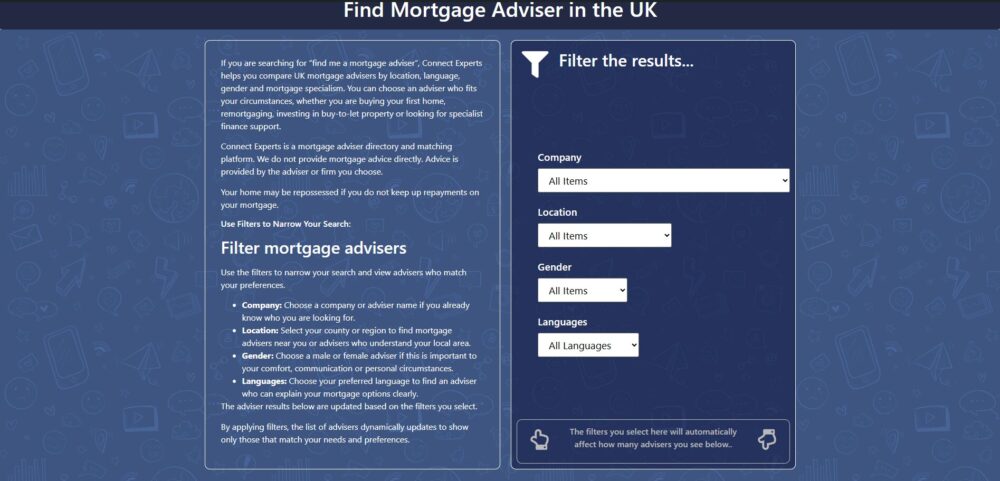
Landlords looking for advice can use Connect Experts to find an HMO mortgage adviser. Connect Experts is the adviser directory for Connect network members and associated authorised firms.
HMO Mortgage Case FAQs
Do all HMO properties need a licence?
No. However, large HMOs normally require mandatory licensing. Councils may also operate additional schemes covering smaller HMOs.
Can a first-time landlord obtain an HMO mortgage?
Some lenders consider first-time landlords, particularly for smaller properties. Deposit, experience, management plans and property complexity will affect the available options.
Is HMO affordability based on room rents?
It can be. Some lenders consider individual room rents, while others use the total tenancy rent or the valuer’s market assessment.
Can an HMO be purchased through a limited company?
Yes. Several lenders accept SPV applications. The company structure, directors, shareholders, rent and personal guarantees will usually be assessed.
Does an HMO licence confirm planning permission?
No. Licensing and planning are separate. Both positions should be checked before the case proceeds.