
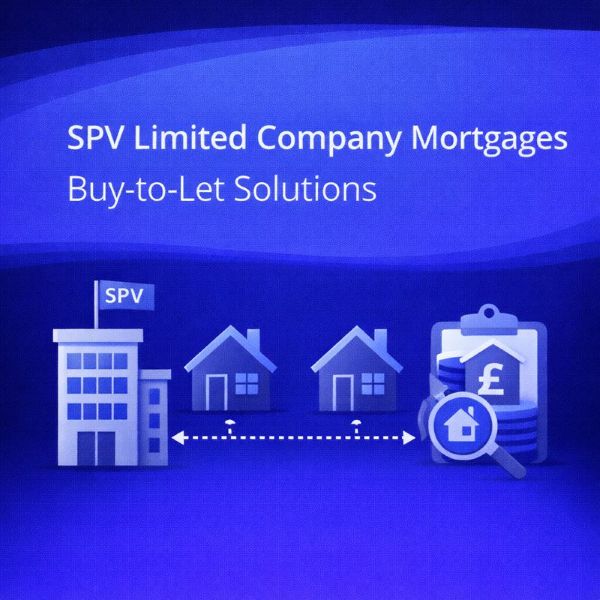
SPV Limited Company Mortgages for Buy-to-Let Landlords. Looking to grow your buy-to-let portfolio efficiently? Setting up a Special Purpose Vehicle (SPV) limited company could be the smartest route for savvy property investors. An SPV structure offers tax advantages, broader access to specialist SPV mortgage lenders, and a flexible foundation for long-term portfolio growth.
Whether you’re just starting out or managing multiple properties, SPV Limited Company Mortgages provide a streamlined, lender-friendly path to scale your investments while staying compliant.
What Is an SPV Limited Company and Why Use One?
A Special Purpose Vehicle (SPV) is a type of limited company for property investment, established solely to buy, hold, and manage real estate, particularly for buy-to-let purposes. It is typically registered under property-specific SIC codes, such as 68100 (buying and selling real estate) or 68209 (letting and operating owned or leased property), which clearly define its business activity.
Lenders favour SPVs over traditional trading companies because SPVs are simpler and purpose-built. Clear operations make underwriting faster and less complex, especially when applying for an SPV limited company mortgage.
Using an SPV also opens the door to more competitive lending options. Most SPV mortgage lenders offer bespoke products with flexible criteria, making them ideal for both first-time landlords and experienced portfolio landlords.
If you’re unsure whether an SPV is right for your goals, our Limited Company Buy-to-Let Guide provides a deeper comparison between personal ownership and company structures.
Benefits of SPV Limited Company Mortgages
Choosing an SPV structure for your buy-to-let investment opens up multiple advantages:
-
Tax Efficiency – Mortgage interest can be claimed as a business expense, and profits are taxed under Corporation Tax rather than Income Tax.
-
Mortgage Flexibility – Access specialist SPV mortgage lenders with tailored criteria for company-owned property.
-
Portfolio Growth – Easier to scale your investments under one company, especially when using mortgages for portfolio landlords.
-
Inheritance Planning – Shares in an SPV can be transferred more efficiently than personally owned property.
“One of our clients transitioned their portfolio to an SPV and unlocked over £7,500 in tax savings annually while accessing better rates from specialist lenders.”
Who Can Apply for SPV Limited Company Mortgages?
-
First-time landlords forming a new SPV
-
Existing investors with multiple properties
-
Property developers looking to retain buy-to-let units
-
Individuals wanting to move property assets out of personal ownership
Whether you’re starting out or restructuring, an SPV offers more control and lender compatibility.
Comparing SPV vs Personal Buy-to-Let
| Feature | SPV Limited Company Buy-to-Let | Personal Buy-to-Let |
|---|---|---|
| Ownership Structure | Property is held under a Special Purpose Vehicle (SPV) limited company, registered with property-specific SIC codes. | Property is held in the landlord’s personal name. |
| Tax Treatment | Profits taxed under Corporation Tax (currently 25%). Mortgage interest can be offset as a business expense. | Profits are taxed under Income Tax. Mortgage interest tax relief is limited for higher-rate taxpayers. |
| Mortgage Availability | Access to specialist SPV mortgage lenders with flexible lending criteria. | Wider access to mainstream lenders, though fewer specialist products are available. |
| Compliance & Transparency | Preferred by underwriters for a clear business purpose. Simplified compliance using AI-backed mortgage platforms. | Regulatory responsibilities lie solely with the individual landlord. Less structured compliance process. |
| Portfolio Management | Ideal for scaling a portfolio landlord strategy within one corporate entity. | Each property is treated separately, making portfolio growth and refinancing more complex. |
| Inheritance Planning | Shares in the SPV can be transferred, offering potential inheritance tax planning benefits. | Transferring property is more complex and may trigger Capital Gains Tax (CGT). |
| Accountancy & Legal Costs | Additional costs for company accounts, filings, and SPV setup. More admin, but more long-term control. | Lower initial costs. Simpler tax return process for small-scale landlords. |
How to Set Up an SPV for Buy-to-Let
-
Register a limited company with HMRC and Companies House
-
Use property-specific SIC codes
-
Open a dedicated business bank account
-
Appoint directors and shareholders
-
Work with a mortgage adviser to apply through the right lender panel
We can guide you through the process and match you with lenders that support SPV buy-to-let funding.
Why Are Lenders Choosing SPV Limited Company Mortgages in 2025?
In 2025, more lenders are prioritising SPV Limited Company Mortgages due to their clarity, defined purpose, and streamlined underwriting process. As Consumer Duty regulations place greater emphasis on transparency and responsible lending, SPVs registered solely for property investment offer lenders a simplified structure that aligns with compliance requirements.
To accelerate decision-making, many lenders now deploy AI-powered underwriting platforms that evaluate SPV applications in real time. These tools assess business structure, financials, and lending risk with speed and accuracy, helping SPV mortgage lenders issue approvals more efficiently, ultimately creating a smoother experience for landlords.
Explore how SPV Limited Company Mortgages for Buy-to-Let are evolving in today’s fast-moving market.
Get Started with SPV Mortgages
Whether you’re forming your first SPV or expanding an existing one, we can help. At Connect, we work with a wide panel of SPV mortgage lenders and provide expert guidance every step of the way.
Let us help you finance smarter, scale faster, and invest tax-efficiently.
Ready to explore SPV Limited Company Mortgages?
→ Speak to our advisers today and build your portfolio with confidence.
Thank you for reading our “Limited Company Buy-to-Let Guide | UK LTD Co. BTL Advice ” publication. Stay “Connect“-ed for more updates soon!
| SPV Buy-to-Let FAQs | Answers |
|---|---|
| Do I need an SPV to get a buy-to-let mortgage? | Not always, but establishing a Special Purpose Vehicle (SPV) can make your application more appealing to specialist lenders. An SPV structure allows you to benefit from tax efficiency and access to tailored buy-to-let mortgage products that are not available to individual landlords. |
| Can I remortgage a property into an SPV? | Yes, you can remortgage from personal ownership into a limited company. This process involves both legal and tax considerations, but it’s a common move for portfolio landlords seeking to consolidate assets under an SPV. Read our guide on portfolio landlord mortgages for more insights. |
| Is it more challenging to get an SPV mortgage? | With the right support and lender panel, it’s often just as straightforward—if not easier. Many SPV mortgage lenders now use AI-based underwriting systems to streamline the approval process for limited company applications, especially when the SPV is structured correctly from the outset. |
| What are the advantages of using an SPV over personal ownership? | SPVs offer a range of benefits, including reduced personal tax liability, simplified portfolio growth, and easier inheritance planning. For a full comparison, visit our Limited Company Buy-to-Let Guide. |
| What SIC codes should I use when forming an SPV? | When registering your SPV with Companies House, use the relevant property codes, such as 68100 (buying and selling of real estate) or 68209 (letting of own or leased real estate). Using the correct codes ensures smoother communication with lenders and compliance with FCA expectations. |
| Can first-time landlords use an SPV? | Absolutely. Many lenders now welcome first-time landlords using SPVs, provided the company is structured correctly and supported by sound financial planning. Visit our page on advice for new mortgage advisers for tips if you’re starting out. |