

Fixed or Tracker Mortgage Rates: Choosing between fixed and tracker mortgage rates is not simply a forecast about where interest rates may move.
It is a suitability decision.
The adviser must assess payment certainty, financial resilience, product costs and the client’s future plans. A lower initial rate may offer short-term value. However, it may not provide the stability the client needs.
Likewise, a fixed rate can protect monthly payments. Yet its restrictions may become costly if the client expects to move, repay borrowing or change the mortgage early.
At a Glance
- Fixed rates provide payment certainty for an agreed period.
- Tracker rates normally move with a stated benchmark.
- Tracker products may include a lender margin, floor or collar.
- Fees and early repayment charges can change the overall result.
- The lowest initial rate is not automatically the lowest-cost option.
- Suitability depends on the client’s budget, plans and ability to absorb change.
How Does a Fixed-Rate Mortgage Work?
A fixed-rate mortgage keeps the interest rate unchanged for an agreed deal period.
This means the contractual monthly payment normally remains stable, provided the mortgage balance, term and repayment method do not change.
Fixed periods commonly last for two, three or five years. Other terms may also be available.
When assessing a fixed product, advisers should review:
- The fixed-rate period
- Monthly payments
- Product and arrangement fees
- Early repayment charges
- Permitted overpayments
- Portability conditions
- The rate applied after the fixed period
- The total cost over the client’s expected holding period
Payment certainty can be valuable. However, certainty has a price when the product restricts early changes.
How Does a Tracker Mortgage Work?
A tracker mortgage is a variable-rate product linked to a stated benchmark.
Many products track the Bank of England Bank Rate. The lender then adds a fixed margin.
For example, a product described as Bank Rate plus 0.75% would rise or fall when Bank Rate changes, subject to the mortgage terms.
The product documents should confirm:
- The benchmark being tracked
- The lender’s margin
- How quickly rate changes take effect
- Whether a minimum rate or floor applies
- Whether the product has a collar
- The tracker period
- Early repayment charges
- The lender’s reversion rate after the deal ends
A tracker does not guarantee lower borrowing costs. It gives the borrower exposure to future movements in the tracked rate.
Fixed and Tracker Mortgage Rates Compared
| Assessment area | Fixed rate | Tracker rate |
|---|---|---|
| Monthly payment | Normally stable during the fixed period | Can rise or fall |
| Rate increases | Borrower is protected during the fixed period | Usually passed to the borrower |
| Rate reductions | Borrower normally receives no immediate benefit | Payments may reduce, subject to product terms |
| Budget planning | Greater certainty | Requires more financial flexibility |
| Early repayment charges | Common during the fixed period | Product-specific and may still apply |
| Product structure | Fixed for an agreed period | Benchmark plus lender margin |
| Future rate | Usually moves to a reversion rate after the deal | May revert after the tracker period |
| Suitable holding period | Must be considered against likely future plans | Must be assessed against payment volatility |
Why the Headline Rate Is Not Enough
A mortgage should not be compared using the interest rate alone.
The product fee can materially affect the overall cost. This is particularly relevant where the mortgage balance is smaller or the client expects to keep the product for a limited period.
Advisers should calculate:
- Monthly payments
- Interest payable during the comparison period
- Product fees
- Valuation and legal costs
- Adviser fees
- Cashback or incentives
- Early repayment charges
- Expected balance at the end of the period
The correct comparison period should reflect the client’s likely plans rather than an arbitrary product term.
Our remortgage guide explains the wider factors that may apply when an existing mortgage deal is ending.
When Might Payment Certainty Matter Most?
A fixed rate may deserve closer consideration where the client:
- Has limited monthly disposable income
- Needs predictable household costs
- Could not comfortably absorb a payment increase
- Expects to retain the mortgage throughout the fixed period
- Values certainty more than possible savings from falling rates
The decision should still account for fees, restrictions and future plans.
A borrower should not be placed into a long fixed period solely because rates might rise.
When Might a Tracker Require Further Analysis?
A tracker may be considered where the client:
- Can afford higher payments if the benchmark rises
- Understands that payments may change
- Has sufficient savings or monthly surplus
- Values product flexibility
- May repay or change the mortgage early
- Accepts uncertainty in return for possible rate reductions
However, these points do not make every tracker suitable. Product-specific charges, floors and restrictions must still be checked.
What Should Advisers Record?
The file should show why the recommended rate structure meets the client’s needs.
The rationale may include:
- The client’s need for stable payments
- The effect of possible rate increases
- Available monthly surplus
- Emergency savings
- Expected property plans
- Likely overpayments
- The required mortgage term
- Product fees and charges
- Early repayment implications
- Alternatives considered
Clear records demonstrate that the recommendation is based on the client’s circumstances rather than a general market prediction.
The Mortgage Network Perspective
Rate selection depends on more than product availability.
Advisers need current sourcing information, lender criteria, compliance support and a clear process for documenting suitability. This becomes more important where the client has complex income, adverse credit or an unusual property.
Connect Network provides adviser services for mortgage brokers, including access to lender and case-support resources.
Where circumstances fall outside standard criteria, advisers can also review the network’s specialist lending support.
A strong network does not replace the adviser’s judgement. It provides the infrastructure needed to research, evidence and deliver that judgement consistently.
Key Takeaway
The fixed-versus-tracker decision should not begin with a prediction.
It should begin with the client.
A suitable recommendation considers payment stability, future flexibility, product conditions and the client’s ability to manage financial change. Rates move, but the purpose of advice remains constant: to connect the mortgage structure with the client’s real circumstances.
Borrowers whose current deal is approaching its end can find an adviser experienced in mortgage-rate reviews.
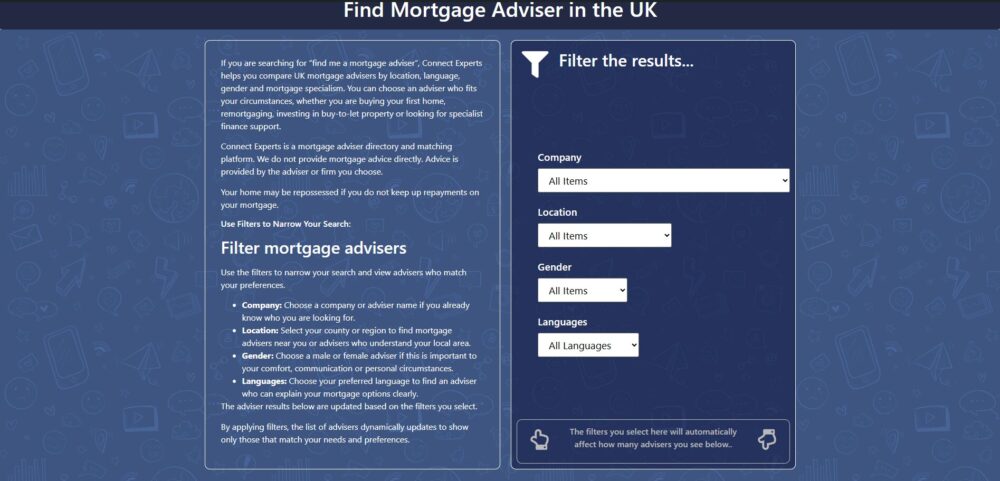
Connect Experts is the adviser directory associated with the Connect network. Consumers can also search the UK mortgage adviser directory by location, experience and personal preferences.
Mortgage advisers interested in broader lender access, compliance guidance and business support can learn more about joining a mortgage network for advisers.
Your home may be repossessed if you do not keep up repayments on your mortgage.