

Remortgage Case Review: A remortgage recommendation begins with the client’s objective, not the newest rate table.
For mortgage advisers, the technical task is to determine whether changing lender produces a suitable overall outcome. That assessment should consider costs, affordability, criteria, timing and the client’s longer-term plans.
Connect Network supports advisers across residential and specialist mortgage cases. Our broader adviser services include case support, referrals and practical placement options.
At a Glance
A structured remortgage review should compare the existing mortgage, a product transfer and any suitable alternative borrowing route.
Advisers should assess:
- The current deal end date and early repayment charge
- The client’s reason for reviewing the mortgage
- Affordability and income evidence
- Current and proposed loan-to-value
- Product fees and total borrowing cost
- Property and lender criteria
- The effect of changing the mortgage term
- Whether additional borrowing is required
The lowest rate may not produce the lowest overall cost.
What Is a Remortgage Case Review?
A remortgage case review examines whether a client should replace their current mortgage with another arrangement.
This might involve:
- Moving to a different lender
- Selecting a product transfer with the current lender
- Changing the mortgage term
- Switching repayment method
- Raising additional funds
- Reviewing a residential or buy-to-let mortgage
- Considering another secured borrowing route
The adviser’s role is to compare the available routes and document why the recommended option meets the client’s needs.
Start With the Client’s Objective
The reason for remortgaging affects the research process.
A client may want to avoid a reversion rate, obtain payment certainty, reduce the mortgage term or raise capital. Another client may need a solution following changed income, credit history or property use.
A clear objective helps prevent rate-led research from producing an unsuitable recommendation.
The Financial Conduct Authority’s mortgage rules include provisions intended to support eligible borrowers switching mortgages, including certain cases without additional borrowing. Advisers should still apply the rules and lender criteria relevant at the time of advice. Read the FCA remortgaging requirements.
Review the Existing Mortgage First
Before researching a replacement product, establish the client’s current position.
Record:
- Outstanding mortgage balance
- Current interest rate
- Monthly payment
- Remaining mortgage term
- Deal end date
- Reversion rate
- Early repayment charge
- Overpayment allowance
- Repayment method
- Current lender’s product transfer options
An attractive new product can become less suitable after an early repayment charge, arrangement fee or longer mortgage term is included.
Compare Remortgaging With a Product Transfer
A product transfer can involve fewer checks and less administration. However, it limits the client to products offered by the existing lender.
A remortgage can provide access to a wider selection of lenders, but it may require:
- A new affordability assessment
- Updated income evidence
- Credit checks
- A property valuation
- Conveyancing work
- Additional product or legal fees
The comparison should consider the total cost over the relevant period, not only the initial rate.
Assess Affordability and Evidence
Lender affordability models differ. Advisers should confirm how each lender treats the client’s income, commitments and financial circumstances.
Evidence may include:
- Payslips and bank statements
- Tax calculations and tax year overviews
- Business accounts
- Accountant references
- Pension income
- Bonus, overtime or commission records
- Existing credit commitments
- Details of dependants and regular expenditure
Self-employed income, retained profit, contract work and multiple income sources may require more targeted lender research.
Check Loan-to-Value and Property Criteria
An estimated property value affects the proposed loan-to-value band and may influence pricing.
However, the lender’s valuation remains decisive.
Advisers should also identify property factors that may affect acceptance, including:
- Construction type
- Lease length
- Above-commercial location
- Ex-local-authority status
- Multiple units or annexes
- Occupancy restrictions
- Buy-to-let rental coverage
- Limited company ownership
Identifying these points before submission can reduce avoidable declines and valuation issues.
Review Fees and the Mortgage Term
A lower monthly payment does not always mean the client will pay less overall.
The assessment should include:
- Product fee
- Valuation fee
- Legal costs
- Adviser fee
- Early repayment charge
- Cashback or incentives
- Interest payable during the comparison period
- Effect of adding fees to the mortgage
- Effect of extending the mortgage term
Extending the term can reduce monthly payments while increasing total interest. The recommendation should explain that trade-off clearly.
Consider Alternative Borrowing Routes
A full remortgage may not always be the most suitable route.
Depending on the client’s circumstances, the adviser may also consider:
- Product transfer
- Further advance
- Second charge mortgage
- Short-term finance
- Retaining the current mortgage until an early repayment charge expires
Where an adviser lacks the relevant permissions or expertise, an appropriate referral route can protect the client relationship while ensuring the case receives suitable advice. Connect members can review available mortgage referral support.
Package the Case Before Submission
Good packaging begins before an application reaches the lender.
The file should clearly explain:
- Why the client is remortgaging
- Why the recommended lender and product were selected
- How affordability was assessed
- Any income or credit complexities
- The source and purpose of additional borrowing
- Relevant property issues
- Why alternative routes were discounted
- How costs and risks were explained
A concise case summary can help an underwriter understand the application without reconstructing the client’s circumstances from separate documents.
How a Mortgage Network Supports Remortgage Cases
Mortgage networks do more than provide lender access.
A complete network can support advisers through compliance guidance, lender criteria, packaging, referrals, case tracking and professional development.
Connect Network supports mainstream and specialist cases, allowing advisers to obtain further help where a remortgage involves complex income, adverse credit, buy-to-let, second charge or commercial considerations.
Advisers reviewing their current support structure can explore how to join Connect Network.
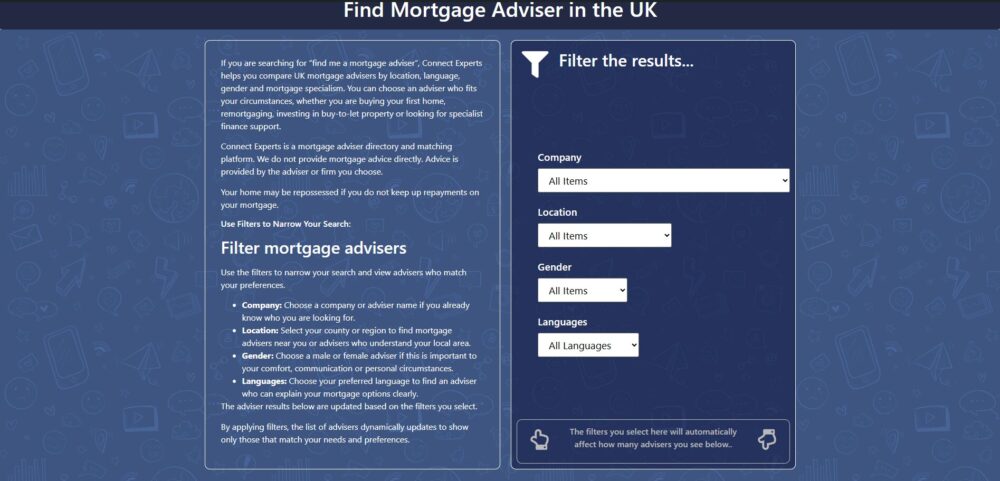
Consumers seeking an adviser can use the Connect Experts remortgage broker directory to compare network advisers by location, language and relevant expertise.
Remortgage Case Review Checklist
Before making a recommendation, confirm:
- The client’s objective is recorded
- The existing mortgage has been reviewed
- Early repayment charges are known
- Product transfer options have been considered
- Affordability has been checked
- Income evidence is available
- The proposed loan-to-value is realistic
- Property criteria have been reviewed
- All material fees are included
- The mortgage term has been assessed
- Alternative routes have been considered
- The recommendation is clearly documented
Key Point
A remortgage is not simply a replacement rate.
It is a restructuring decision involving timing, evidence, cost and future flexibility. A strong adviser process turns those separate factors into one clear and supportable recommendation.
Mortgage criteria, regulation and product availability can change. Advisers should confirm current requirements before making a recommendation.
Frequently Asked Questions
When should an adviser begin a remortgage review?
The review should begin early enough to assess the current mortgage, gather evidence and compare available routes before the existing deal ends. The appropriate timing will depend on lender offer periods and the client’s circumstances.
Is a product transfer the same as a remortgage?
No. A product transfer usually means selecting another product from the existing lender. A remortgage normally involves arranging a new mortgage, often with another lender.
Should the adviser compare total cost or interest rate?
The adviser should consider both. Fees, incentives, early repayment charges, loan size and mortgage term can make a lower rate more expensive overall.
Can an adviser recommend additional borrowing during a remortgage?
Additional borrowing may be considered where it is affordable, suitable and accepted under lender criteria. Its purpose, cost and effect on the client’s secured debt should be clearly explained.
What should happen when a case falls outside the adviser’s permissions?
The adviser should follow the firm’s compliance process and consider an approved referral route to a suitably qualified adviser.