
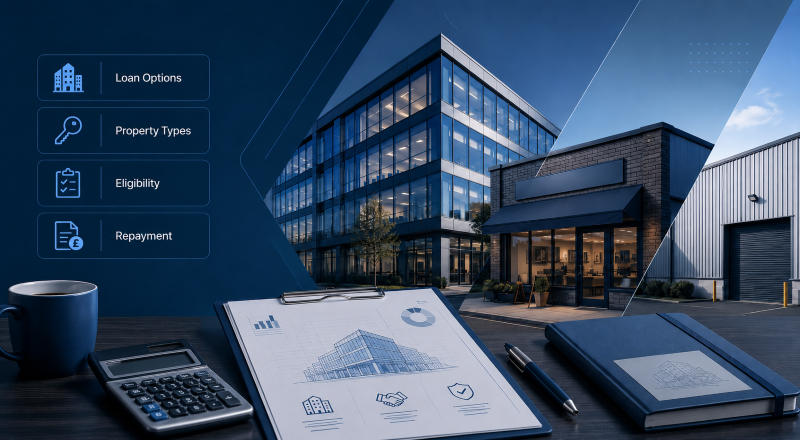
Commercial Mortgage Guide for UK Brokers: Commercial mortgage lending is based on more than a property value.
A lender must understand the borrower, the building, the income and the repayment route. Each part affects whether the case is acceptable and how the loan may be structured.
This commercial mortgage guide explains the main technical checks involved. It also shows how brokers can prepare and place commercial property finance cases more effectively.
At a Glance
A commercial mortgage is secured against property used for business or investment purposes.
Lenders normally assess:
- The property type and intended use
- The borrower’s trading or investment experience
- Business or rental income
- Deposit or available equity
- Credit history and existing commitments
- Lease terms and tenant quality
- The proposed repayment structure
Commercial cases are often assessed individually. Clear documents and accurate case packaging can therefore influence both lender choice and application progress.
What Is a Commercial Mortgage?
A commercial mortgage is a loan secured against property used for business activity or commercial investment.
It may support:
- The purchase of premises occupied by a business
- The purchase of a property let to another business
- Refinancing an existing commercial property
- Raising capital against business premises
- Replacing short-term property finance
- Expanding or relocating a trading business
Commercial mortgages are different from standard residential mortgages. Lenders commonly review the commercial value of the property alongside the strength of the borrower and repayment plan.
A building containing both residential and business space may require a different lending route. Our semi-commercial mortgage guide explains how mixed-use properties are assessed.
Owner-Occupied and Commercial Investment Mortgages
The intended use of the property is one of the first lender considerations.
Owner-occupied commercial mortgages
An owner-occupied mortgage is used when a business buys or refinances premises from which it trades.
Examples include:
- Offices
- Warehouses
- Shops
- Workshops
- Surgeries
- Industrial units
- Hospitality premises
The lender may focus on the business accounts, cash flow, profitability and ability to meet the proposed payments.
Commercial investment mortgages
A commercial investment mortgage is normally used when the property will be let to another business.
The lender may assess:
- The rental income
- The commercial lease
- The remaining lease term
- Tenant strength
- Local demand
- Potential void periods
- The investor’s experience
The property may be the same physical asset, but its use changes how the lender views the risk.
How Commercial Mortgage Lenders Assess a Case
Commercial mortgage underwriting usually considers several connected areas.
The borrower
The lender will review who is borrowing and how the loan will be maintained.
This may include:
- Trading history
- Business accounts
- Management accounts
- Bank statements
- Existing borrowing
- Credit history
- Assets and liabilities
- Relevant property or sector experience
A newer business may still be considered. However, the lender may require stronger forecasts, additional security or evidence of relevant experience.
The property
The property must be suitable security for the lender.
The assessment may cover:
- Current use
- Planning position
- Condition
- Location
- Market demand
- Alternative use
- Saleability
- Environmental or structural concerns
- Whether the property is specialised
A standard office or industrial unit may have more lender options than a property designed for a narrow business use.
The income
For an owner-occupied property, affordability may be supported by business trading income.
For an investment property, the lender may rely more heavily on rent, lease terms and tenant quality.
Some lenders use debt service cover calculations. Others consider rental cover, business profitability or a combination of measures.
The deposit or equity
Commercial mortgage deposits commonly begin at around 25% of the purchase price. However, the required contribution depends on the property, borrower and lender.
A larger deposit may be required where:
- The property has a specialist use
- The business has a short trading history
- The commercial unit is vacant
- The lease is weak
- Credit issues are present
- Income is difficult to evidence
The deposit alone does not determine acceptance. A lower loan-to-value cannot always compensate for an unsuitable property or weak repayment plan.
Documents Needed for a Commercial Mortgage
Commercial applications often require more evidence than standard residential cases.
A lender may request:
- Proof of identity and address
- Proof of deposit
- Business accounts
- Management accounts
- Business bank statements
- Personal bank statements
- Cash-flow forecasts
- A business plan
- Details of existing borrowing
- An asset and liability statement
- Property particulars
- Lease documents
- Tenant information
- Rental evidence
- Details of the proposed loan purpose
The exact requirements vary. However, brokers can reduce avoidable delays by checking the likely document list before submitting the case.
Clear packaging helps the underwriter understand the transaction without repeatedly requesting basic information.
Commercial Mortgage Rates, Fees and Terms
Commercial mortgage pricing is normally case-specific.
The interest rate may be affected by:
- Loan-to-value
- Property type
- Loan size
- Business performance
- Rental income
- Credit history
- Sector risk
- Repayment structure
- Lender appetite
Possible costs include:
- Lender arrangement fees
- Valuation fees
- Legal fees
- Broker fees
- Administration charges
- Specialist reports
- Early repayment charges
- Insurance costs
Some lenders offer capital repayment, interest-only or part-and-part structures. The available term will depend on the borrower’s circumstances, the property and the proposed repayment plan.
The lowest headline rate is not always the lowest overall cost. Fees, loan structure and early repayment conditions must also be considered.
The Commercial Mortgage Application Process
A typical application may follow these stages:
- Confirm the loan purpose.
- Establish how the property will be used.
- Review the borrower’s accounts and income.
- Check the deposit or equity position.
- Gather the supporting documents.
- Identify lenders with suitable criteria.
- Present the case for an initial assessment.
- Submit the full application.
- Complete the commercial valuation.
- Satisfy underwriting and legal requirements.
- Receive the formal mortgage offer.
- Complete the transaction.
Projects involving major building work, conversion or staged construction funding may require development finance rather than a standard commercial mortgage. See our development finance guide for that process.
Common Commercial Mortgage Placement Problems
A case may be delayed or declined when:
- The loan purpose is unclear
- Accounts are incomplete
- Forecasts are unsupported
- The property use is unsuitable
- Lease documents are missing
- Rental income is overstated
- The deposit source is unclear
- Existing commitments are not disclosed
- The case is submitted to an unsuitable lender
Good placement begins with understanding the transaction before selecting a lender.
A commercial mortgage is not simply a product attached to a property. It is a financial structure built around how that property will support a business or investment.
Commercial Mortgage Support for Brokers
Commercial mortgage cases can involve specialist property, detailed accounts and individually assessed lender criteria.
Connect Network supports advisers across commercial mortgages, semi-commercial finance, bridging, development finance and other specialist property cases.
Through Adviser Services, brokers can explore referral, packaging and case-placement support where appropriate.
This broader structure can help advisers identify the correct lending route while keeping the client journey clear.
Brokers researching related subjects can also visit our mortgage and property finance guides.
Connect Network and the Adviser Directory
Connect for Intermediaries forms part of the wider Connect Group.
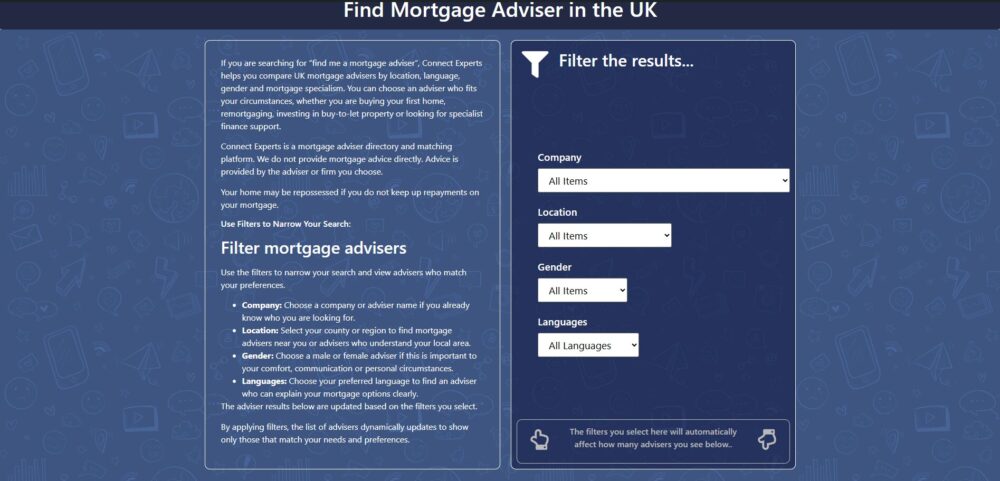
Connect Experts provides an adviser directory that includes advisers from the Connect network and associated firms. Business owners and property investors can use it to find a commercial mortgage adviser by location and other preferences.
For brokers, this connection supports greater visibility while giving users control over which adviser they choose to contact.
Experienced advisers looking for wider lender access, compliance guidance and commercial case support can learn more about how to Join Connect Network.
Commercial Mortgage FAQs
What is a commercial mortgage?
A commercial mortgage is a loan secured against property used for business or commercial investment purposes.
How much deposit is normally required?
Deposits commonly begin at around 25%. Higher contributions may be required for specialist properties, weaker income or more complex cases.
Can a new business obtain a commercial mortgage?
Some lenders consider newer businesses. They may request detailed forecasts, relevant experience, additional security or a larger deposit.
What affects commercial mortgage affordability?
Affordability may depend on business income, rental income, existing borrowing, proposed payments and the lender’s required debt service cover.
Are all commercial mortgages regulated?
No. The regulatory position depends on the borrower, property use and transaction structure. Each case should be assessed individually.
How long does a commercial mortgage take?
Timescales depend on the lender, valuation, documents and legal work. Specialist properties or complex ownership structures may take longer.