
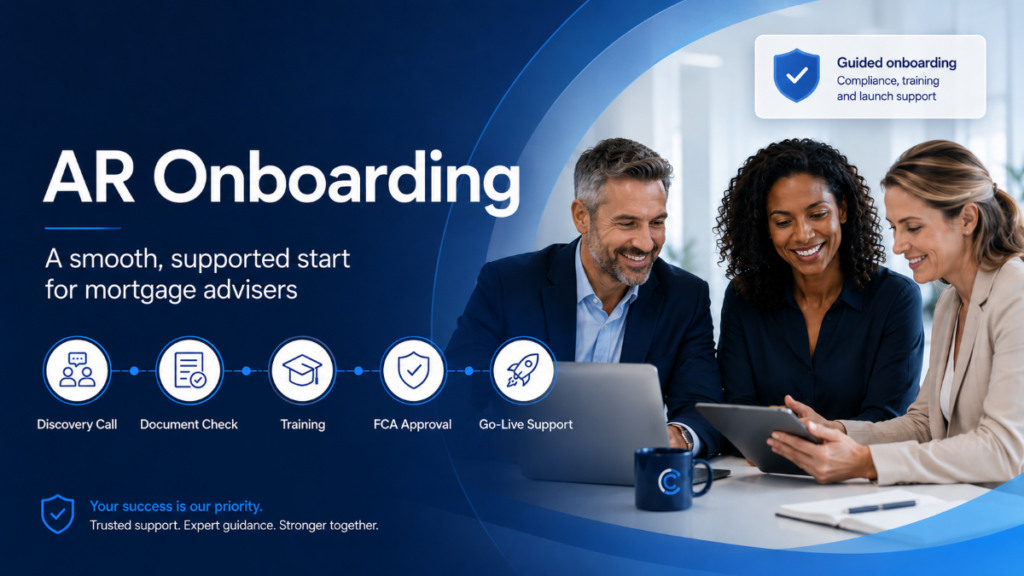
AR Onboarding:
Becoming an Appointed Representative involves more than completing an application. It is a structured process that tests whether an adviser, firm and principal can work together responsibly.
Good onboarding creates certainty before regulated activity begins. It defines permissions, responsibilities, systems and standards while there is still time to resolve questions.
Connect Network supports mortgage advisers through each stage, from the first business review to training, regulatory notification and go-live preparation.
At a Glance
AR onboarding normally includes:
- An initial business and suitability review
- Identity, qualification and financial checks
- Agreement of regulated activities and permissions
- Compliance, systems and process training
- FCA notification by the principal firm
- Lender and provider registrations
- Final checks before regulated activity begins
Timings vary according to the applicant, documentation, training requirements and regulatory processing.
What Is AR Onboarding?
AR onboarding prepares an adviser or firm to operate as an Appointed Representative of an authorised principal firm.
The principal accepts regulatory responsibility for the activities covered by the AR agreement. It must therefore assess the proposed AR before appointment and maintain suitable oversight after trading begins.
Onboarding should confirm:
- Who will provide regulated advice
- Which products and services are permitted
- How advice files will be reviewed
- Which systems must be used
- How financial promotions will be approved
- What training and supervision will apply
- How complaints and client outcomes will be managed
Advisers still comparing regulatory routes can read about becoming an Appointed Representative.
The AR Onboarding Process
1. Initial Business Review
The first stage examines the proposed business rather than simply collecting contact details.
Connect will normally discuss:
- Adviser experience and qualifications
- Current employment or network status
- Proposed client types
- Expected business volumes
- Lead sources
- Mortgage and protection activities
- Specialist lending plans
- Branding and trading names
- Future recruitment intentions
This discussion helps both parties decide whether the proposed arrangement is suitable.
It should also identify permissions or support requirements before formal checks begin.
2. Application and Due Diligence
The principal must establish that the proposed AR is suitable, financially stable and capable of carrying out the agreed activities.
Checks may cover:
- Identity and address
- Employment history
- Adviser qualifications
- Regulatory history
- Credit and financial standing
- Directorships and business interests
- Previous network relationships
- Complaints or disciplinary matters
- Company ownership and structure
Applicants should provide complete and accurate information. Missing records or unexplained differences are common causes of delay.
3. Agreement of Activities and Responsibilities
An AR cannot automatically carry out every activity covered by the principal firm.
The written agreement should define the work the AR may undertake. It should also explain the limits of those activities.
This may include:
- Residential mortgage advice
- Buy-to-let mortgages
- Protection
- General insurance
- Bridging finance
- Commercial finance
- Second charge mortgages
- Later life lending
- Referral-only services
Permissions depend on qualifications, competence, experience and the agreement reached with the principal.
The wider Connect mortgage network page explains the support available across mainstream and specialist lending.
4. Compliance and Systems Training
Qualifications demonstrate knowledge. Onboarding establishes how that knowledge must be applied within the network.
Training may cover:
- Advice standards
- Client fact-finding
- Research and suitability
- Vulnerable customer procedures
- Consumer Duty expectations
- File submission
- Financial promotions
- Complaint handling
- Data protection
- CRM and sourcing systems
- Lender application processes
Experienced advisers may already understand many of these principles. However, they must still learn the principal firm’s processes and controls.
Advisers needing a more structured development route can review the Mortgage Adviser Academy UK.
5. FCA Notification
The principal firm submits the proposed appointment to the Financial Conduct Authority.
The FCA states that a principal must notify it at least 30 calendar days before the AR appointment starts. The principal should complete its due diligence before submitting the notification.
Read the FCA guidance on onboarding an Appointed Representative.
An adviser must not begin regulated activity simply because training or internal checks have finished. The required appointment and approvals must be in place first.
6. Go-Live Preparation
Regulatory notification is only one part of becoming operational.
Before go-live, the adviser may also need:
- Approved website and marketing content
- CRM access
- Email and communication systems
- Lender registrations
- Provider agency access
- Sourcing software
- File-checking arrangements
- Commission and payment details
- Professional stationery
- Data protection procedures
- A clear client communication process
Connect may also discuss inclusion in the Connect Experts mortgage adviser directory.
Connect Experts helps consumers search for advisers by location, language, mortgage type and other practical preferences. Mortgage advice is then provided by the adviser or firm selected by the consumer.
Documents to Prepare
Applicants can reduce avoidable delays by preparing:
- Valid identification
- Proof of address
- Qualification certificates
- Employment and advice history
- Company incorporation records
- Ownership and director information
- Business plans and forecasts
- Details of lead sources
- Proposed website content
- Previous regulatory references
- Information about complaints or financial issues
- Details of intended regulated activities
Documents should be current, consistent and easy to verify.
What Can Delay AR Onboarding?
Common causes include:
- Incomplete applications
- Missing qualification records
- Unclear business ownership
- Undisclosed financial matters
- Inconsistent employment dates
- Unapproved websites or promotions
- Changes to the proposed business model
- Delayed training attendance
- Lender registration requirements
- Regulatory queries
Speed matters, but accuracy matters more. A rushed appointment can create weaknesses that continue after the adviser starts trading.
What Happens After Onboarding?
Onboarding ends when the adviser is ready to begin. Regulatory oversight does not.
Ongoing support may include:
- File reviews
- Compliance monitoring
- Training and development
- Business quality reviews
- Lender and product updates
- Systems support
- Case placement assistance
- Marketing reviews
- Business development support
The Connect adviser services available after appointment help advisers understand where to obtain ongoing operational support.
Start Your AR Onboarding Discussion
A strong network relationship begins with clear expectations.
Connect will review your experience, intended activities and support needs before explaining the next steps. This gives both parties the information needed to make a responsible decision.
Join Connect Network to start a confidential discussion about Appointed Representative status.

Frequently Asked Questions
How long does AR onboarding take?
There is no single timescale. The process depends on due diligence, document quality, training, FCA processing and lender registrations.
What does AR mean?
AR means Appointed Representative. An AR carries out agreed regulated activities under the responsibility of an authorised principal firm.
Does the principal complete the FCA notification?
Yes. The authorised principal submits the appointment notification after completing its checks and agreeing the proposed activities.
Can an AR use its own business name?
This may be possible, subject to approval, regulatory disclosures and the principal firm’s branding and financial promotion requirements.
Can a newly qualified adviser become an AR?
Potentially. The available route will depend on qualifications, relevant experience, competence, supervision needs and the principal firm’s assessment.
Can an AR advise on specialist mortgages?
Only where the relevant activities are included within the AR agreement and the adviser has the required competence, permissions and supervision.
What happens if information changes during onboarding?
The applicant should tell the principal immediately. Changes to ownership, activities, financial circumstances or personnel may require further assessment.