
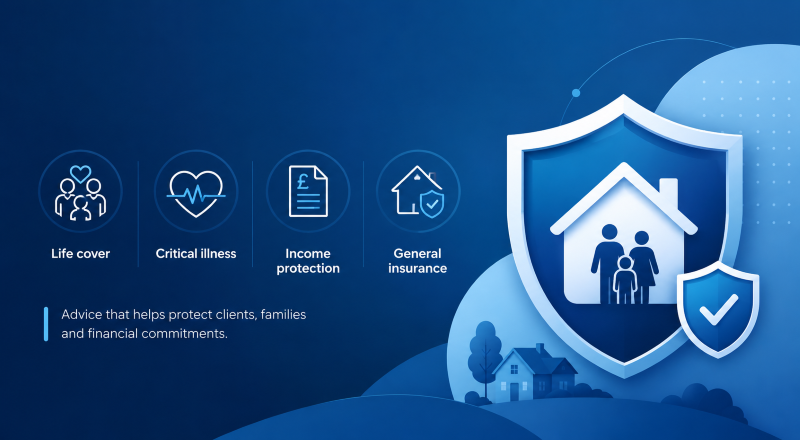
What Is a Protection Adviser? A protection adviser helps clients understand how insurance can support them, their family, income, mortgage, or business if their circumstances change.
That may sound simple. In practice, it is one of the most important advisory roles in financial services.
A mortgage can show what a client can afford today. Protection advice asks a different question: what happens if that affordability changes tomorrow?
That is where the role becomes technical, practical and human.
A protection adviser reviews the client’s income, debts, family responsibilities, existing cover, health, occupation, mortgage plans and monthly budget. They then explain suitable protection options in plain language.
The aim is not to frighten the client. It is to help them understand risk before risk becomes real.
At a Glance
A protection adviser helps clients choose suitable insurance to protect income, mortgage payments, family finances or business commitments.
They may discuss life insurance, critical illness cover, income protection, family income benefit, key person protection, mortgage protection and home insurance.
The role requires strong product knowledge, clear communication, careful fact-finding and ethical advice.
For mortgage advisers, protection advice now sits alongside affordability, suitability, and Consumer Duty expectations.
What Is a Protection Adviser in a Mortgage and Protection Network?
The phrase Mortgage and Protection Network can sometimes give the impression that mortgage advice comes first and protection advice sits behind it. In some firms, the first word may appear to carry the greater importance. That is not how Connect Network views advice.
A mortgage may secure the property, but protection helps secure the person, the family, the income and the future behind that property. Both parts matter.
The insurance market, like the wider financial services sector, can be complex. Customers are also facing changing costs, changing risks and changing expectations. This makes the need for well-trained protection advisers more important than ever.
At Connect Network, protection is not treated as a minor add-on to mortgage advice. It is part of a complete advice journey. A client may start with a mortgage need, but the right advice should also consider what happens if illness, injury, death or loss of income affects their ability to keep that mortgage and protect their household.
That is why protection advisers play such an important role. They help clients understand risk, compare suitable cover and make informed decisions before life forces those decisions upon them.
What Does a Protection Adviser Do?
A protection adviser helps clients make informed decisions about financial protection.
Their work usually starts with a fact-find. This allows the adviser to understand the client’s circumstances before any product is discussed.
A protection adviser may assess:
- Income and employment status
- Mortgage balance and monthly payments
- Family responsibilities
- Debts and regular commitments
- Existing insurance policies
- Savings and emergency funds
- Health and lifestyle factors
- Business responsibilities
- Budget and affordability
- Attitude to financial risk
The adviser then explains which risks could affect the client and what cover may be suitable.
This is important because protection advice is rarely about one product. It is about building a sensible plan around the client’s real life.
For example, a parent with a mortgage may need life insurance to protect their family. A self-employed client may need income protection because sick pay may be limited. A company director may need key person cover to protect the business if a key employee dies or becomes seriously ill.
A good protection adviser does not simply list policies. They explain purpose, cost, limitations and value.
Main Types of Protection a Client May Discuss
Protection advice can cover several products. Each product works differently, so the adviser must explain what it does and what it does not do.
Life Insurance
Life insurance can pay a lump sum if the insured person dies during the policy term.
It may be used to help repay a mortgage, support dependants, cover debts or provide family financial support.
A protection adviser will usually explain the difference between level term cover, decreasing term cover and family income benefit.
Critical Illness Cover
Critical illness cover can pay a lump sum if the client is diagnosed with a serious illness listed in the policy.
The adviser must explain that policies differ by insurer. Conditions, definitions, exclusions and claim rules can vary.
This is where technical knowledge matters. The cheapest policy may not always provide the most suitable cover.
Income Protection
Income protection can replace part of the client’s income if illness or injury stops them working.
A protection adviser will review the deferred period, benefit period, occupation definition, maximum benefit and premium type.
This product often needs careful explanation because it protects income rather than a specific debt.
Mortgage Protection
Mortgage protection is often designed to help repay or support mortgage commitments if death, illness or loss of income affects the borrower.
It may involve life insurance, critical illness cover, income protection or a combination of policies.
The adviser’s role is to match the cover to the mortgage, client need and budget.
Family Income Benefit
Family income benefit can provide regular payments to dependants if the insured person dies during the policy term.
It can be useful where a family wants ongoing monthly support rather than one lump sum.
Key Person Protection
Key person protection is mainly used by businesses.
It can help protect a company if a key employee, director or business owner dies or becomes seriously ill.
The adviser must understand business structure, financial dependency and the commercial impact of losing that person.
Home Insurance
Some protection advisers also discuss buildings and contents insurance.
This is especially relevant where a client is buying a home, remortgaging or reviewing property-related cover.
Why Protection Advice Matters in a Mortgage Journey
Mortgage advice and protection advice are different, but they often meet at the same point.
A mortgage creates a long-term financial commitment. The lender may check whether the client can afford the mortgage today. The protection adviser helps the client consider whether they could still manage if their income, health or family situation changed.
That is why protection should not feel like an afterthought.
It should be discussed early, clearly and with proper context.
You can read more about this wider advice standard in our guide to protection advice under Consumer Duty.
A protection conversation does not mean every client must take every policy. It means the client should understand the risks, options and consequences before making a decision.
How a Protection Adviser Builds a Recommendation
A strong protection recommendation is based on evidence.
The adviser must understand the client before recommending cover.
A typical process may include:
- Completing a full client fact-find
- Checking existing policies and employer benefits
- Identifying gaps in cover
- Calculating the level of cover needed
- Reviewing affordability
- Comparing relevant insurers
- Explaining policy features and exclusions
- Confirming why the recommendation is suitable
- Recording the client’s decision
- Reviewing cover when circumstances change
This process helps avoid guesswork.
It also helps the client understand the difference between “having a policy” and having the right policy.
Technical Areas a Protection Adviser Must Understand
Protection advice requires more than people skills.
A protection adviser needs to understand how different policy features affect real outcomes.
Key technical areas include:
- Sum assured
- Policy term
- Deferred period
- Benefit period
- Guaranteed or reviewable premiums
- Iindexation
- Waiver of premium
- Exclusions
- Underwriting
- Trust planning
- Occupation classes
- Claim definitions
- Replacement cover risks
- Cancellation rules
- Affordability over the full term
These details matter.
A policy that looks suitable at the start may not remain suitable if the premium rises, the benefit is too low, or the definition of claim is too narrow.
The adviser’s job is to help the client see those details before they apply.
What Skills Does a Protection Adviser Need?
A protection adviser needs technical knowledge, but that alone is not enough.
Clients often discuss protection when they are buying a home, starting a family, changing jobs, running a business or reviewing financial commitments. These conversations can be sensitive.
A good protection adviser needs:
- Clear communication
- Careful listening
- Strong product knowledge
- Ethical judgement
- Attention to detail
- Confidence with numbers
- Patience when explaining policy terms
- Good record keeping
- The ability to discuss risk without pressure
The best advisers do not simply sell cover. They help clients make decisions with confidence and understanding.
What Qualifications Does a Protection Adviser Need?
The qualification route depends on the adviser’s role, permissions and the type of advice being provided.
A protection-only adviser may follow a different route from a mortgage and protection adviser. They still need suitable training, competence, supervision and product knowledge.
Many advisers build protection knowledge through professional study, insurer training, internal network training and continuing professional development.
A mortgage and protection adviser will usually need a recognised mortgage advice qualification when advising on regulated mortgage contracts. The Certificate in Mortgage Advice and Practice, known as CeMAP, is one recognised route for mortgage advice.
A protection-specific study can also help advisers develop deeper technical knowledge in areas such as life cover, critical illness cover, income protection, business protection, and trust planning.
For advisers working within a network, permissions, supervision and compliance support are also important. Connect Network supports advisers through a wider mortgage and protection network model.
Protection Advice and Compliance
Protection advice must be clear, fair and suitable.
The adviser should explain the client’s options, the cost of cover, the risks of not taking cover and any key exclusions or limits.
Good advice should also be recorded properly.
This includes why a recommendation was made, what alternatives were considered and what the client decided.
For advisers, this is where compliance support matters. A strong framework helps advisers provide consistent advice and maintain appropriate records.
Connect Network provides adviser support through Connect Brokers’ compliance support, training and practical guidance.
How Much Can a Protection Adviser Earn?
Protection adviser earnings vary.
Income can depend on experience, employment status, client source, product mix, commission structure, quality of advice and whether the adviser works alone or as part of a wider firm.
A newer adviser may start on a salary. An experienced adviser may earn more through a mix of salary, commission or self-employed income.
However, earnings should not be the only reason to enter into protection advice.
The role carries responsibility. Clients may rely on the advice during some of the hardest moments in their lives.
That is why the work needs knowledge, care and discipline.
Is Protection Advice a Good Career?
Protection advice can be a strong career path for people who want to combine financial knowledge with meaningful client support.
It may suit people who enjoy explaining complex subjects, asking careful questions and helping clients make practical decisions.
It can also work well for mortgage advisers who want to provide a more complete advice journey.
For advisers who want structure, training, compliance support and access to wider opportunities, it may be worth reviewing how to Join Connect Network.
When Should a Client Speak to a Protection Adviser?
Clients may need protection advice when they:
- Buy a home
- Remortgage
- Start a family
- Become self-employed
- Change jobs
- Take on more borrowing
- Start or grow a business
- Review existing cover
- Separate from a partner
- Become a landlord
- Want to protect income or dependants
Protection advice is often most useful before a major financial change is completed.
That gives the client time to understand their options and make decisions without pressure.
Clients looking for advice can speak with protection mortgage brokers who can explain how cover may sit alongside a mortgage or wider financial commitments.

FAQ: What Is a Protection Adviser?
What is a protection adviser?
A protection adviser helps clients understand and arrange insurance that can protect income, mortgage payments, family finances or business commitments if illness, injury, death or another major event affects them.
What does a protection adviser do?
A protection adviser reviews the client’s income, debts, family needs, mortgage commitments, existing cover and budget. They then explain suitable protection options and help the client decide what cover may be appropriate.
What products can a protection adviser discuss?
A protection adviser may discuss life insurance, critical illness cover, income protection, mortgage protection, family income benefit, key person protection and home insurance.
Is a protection adviser the same as a mortgage adviser?
No. A mortgage adviser helps clients arrange mortgage finance. A protection adviser helps clients consider insurance that can support them if their circumstances change. Many advisers provide both mortgage and protection advice.
Do protection advisers need qualifications?
The qualification route depends on the adviser’s role and permissions. Mortgage and protection advisers usually need a recognised mortgage advice qualification if they advise on regulated mortgage contracts. Protection advisers also need suitable training, competence and product knowledge.
Why is protection advice important?
Protection advice helps clients understand how they would manage if income stopped, illness affected work, a borrower died or family finances changed. It supports better financial planning and can reduce the risk of serious hardship.
Is protection insurance compulsory?
Protection insurance is not usually compulsory. However, it should be considered carefully when a client takes on a mortgage, has dependants, relies on earned income or has business responsibilities.
Can protection cover be reviewed later?
Yes. Protection should be reviewed when income, mortgage balance, family circumstances, employment status or business needs change.