
A complex buy-to-let mortgage is not simply a difficult case. It is often a sign that the borrower, the property or the investment strategy has moved beyond the limits of standard lending.
Some landlords own through a limited company. Some manage several properties at once. Some invest in HMOs, multi-unit blocks, holiday lets or mixed-use buildings. Others have income that requires careful explanation, historical credit issues that require context, or a property that does not fit neatly into a lender’s standard box.
That is where the philosophy of complex buy-to-let begins. The task is not only to find a rate. It is to understand the story of the case, test the strength of the structure and match the borrower to a lender that can see the logic behind the application.
For advisers, this is where specialist support matters. A complex case requires knowledge of criteria, packaging discipline, lender access, and the ability to explain risk clearly. Connect helps advisers work through these scenarios with confidence, from initial case assessment to lender placement and submission.
What Is a Complex Buy-to-Let Mortgage?
A complex buy-to-let mortgage is a landlord mortgage case that does not meet standard lender criteria due to the property type, ownership structure, rental model, borrower profile, or wider portfolio position.
This may include:
- Limited company or SPV ownership
- Houses in Multiple Occupation
- Multi-Unit Freehold Blocks
- Portfolio landlords with several mortgaged properties
- Holiday lets and short-term rental properties
- Semi-commercial or mixed-use property
- First-time landlords buying specialist property
- Adverse credit or historic financial difficulty
- Non-standard income, including retained profits or foreign income
- Layered company structures or intercompany loans
These cases are not automatically unsuitable. They simply need better interpretation. The adviser’s role is to turn complexity into clarity so that the lender can understand the borrower, the property, the income and the risk.
For a wider foundation, advisers can refer to the Buy-to-Let Mortgage Guide.
Why the Title Matters: Complex Buy-to-Let Is About Understanding, Not Just Criteria
The title of this page should do more than describe a product. It should position complex buy-to-let as a thinking discipline.
A standard buy-to-let case may ask, “Does this fit?”
A complex buy-to-let case asks, “How does this work?”
That difference matters. Complex lending is rarely about forcing a case into a lender’s system. It is about understanding the moving parts and presenting them in a way that feels coherent, credible and complete.
The product is a mortgage, but the value is judgement.
A strong adviser does not treat an HMO, SPV, MUFB or portfolio landlord as a problem. They treat the case as a structure that needs to be understood. The property has a purpose. The ownership has a reason. The income has a pattern. The lender needs to see how each part connects.
That is why this page should not read like a generic buy-to-let article. It should help advisers and landlords understand that complexity is not the enemy of lending. Poor explanation is.
When a Buy-to-Let Case Becomes Complex
A buy-to-let case usually becomes complex when one or more parts of the application need specialist underwriting.
- The property is not standard: Some rental properties carry additional risk because they are harder to value, manage, let or resell. This may include HMOs, MUFBs, holiday lets, semi-commercial units, large blocks or properties with unusual layouts.
- The landlord structure is more advanced: A landlord may use an SPV limited company, multiple companies, layered ownership, director loans or retained profits. These structures may be suitable for some clients, but they must be explained clearly.
- For more details on this structure, see the Limited Company Buy-to-Let Guide.
- The rental model needs interpretation: A single AST may be simple to assess. Room-by-room income, holiday let projections, serviced accommodation income or mixed tenancy arrangements need a more careful view.
- The landlord owns several properties: Portfolio landlords may need a wider assessment of borrowing, rental cover, property values, background assets and future plans. Advisers working with multi-property clients can also review the Portfolio Landlord Guide.
- The borrower profile needs context: Complex income, historic credit issues, multiple income streams, foreign income or self-employed earnings may all need careful packaging. The lender needs evidence, not assumptions.
Types of Complex Buy-to-Let Cases
SPV Limited Company Buy-to-Let
Many landlords choose to buy or hold property through a Special Purpose Vehicle. This may support a longer-term investment strategy, particularly for portfolio landlords or higher-rate taxpayers.
Lenders may assess:
- SIC codes
- Company structure
- Director and shareholder details
- Director guarantees
- Source of deposit
- Intercompany loans
- Trading history or new company status
- Existing landlord experience
The key is clarity. A simple SPV may be straightforward for many lenders. A layered or multi-company structure may need a lender that understands why the structure exists and how the risk is controlled.
HMO Buy-to-Let Mortgages
An HMO can offer stronger rental yield, but it also brings greater responsibility. Licensing, room sizes, tenant type, management standards, fire safety, Article 4 areas and valuation approach can all affect lender appetite.
Advisers should consider:
- Number of occupants
- Number of households
- Licence position
- Local authority rules
- Article 4 restrictions
- Room-by-room rent
- Management experience
- Safety documentation
- Valuation method
For a more detailed overview of the HMO journey, visit the HMO Mortgage Guide.
Multi-Unit Freehold Blocks
A Multi-Unit Freehold Block, often called a MUFB, may include several self-contained units under one freehold title. These cases are often attractive to experienced landlords, but the underwriting can be more detailed.
Lenders may review:
- Number of units
- Tenancy type for each unit
- Separate rental values
- Shared services
- Planning position
- EPC position
- Resale demand
- Management arrangements
An MUFB is not judged as a single building. It is judged as several income-producing units held within one legal structure. That distinction matters.
Portfolio Landlords
Portfolio landlord cases require a wider view. The lender is not only assessing the subject property. It may also assess the landlord’s full background portfolio.
This may include:
- Total borrowing
- Total rental income
- Property values
- LTV across the portfolio
- Stress testing
- Experience
- Business plan
- Cash flow
- EPC position
- Future borrowing plans
The philosophical point is simple: a portfolio is not a list of properties. It is an ecosystem. If one part is weak, it can affect how the whole case is understood.
Holiday Lets and Short-Term Rentals
Holiday lets and short-term rental properties can be attractive for landlords seeking stronger seasonal income. They can also be harder for lenders to assess because income may vary across the year.
Lenders may consider:
- Projected rental income
- Local demand
- Seasonality
- Location
- Occupancy expectations
- Management model
- Planning or local restrictions
- Serviced accommodation use
The adviser’s role is to show that the income model is realistic, not optimistic.
Adverse Credit and Non-Standard Income
Some landlords have historic credit issues or income that does not fit a standard employed profile. This does not always prevent lending, but it does change the conversation.
Specialist lenders may consider:
- Missed payments
- Defaults
- CCJs
- Debt management history
- Self-employed income
- Retained profits
- Dividend income
- Foreign income
- Rental income combined with employment income
The question is not only what happened. It is what has changed since then, what evidence supports the recovery and whether the new mortgage remains affordable.
Why Specialist Advice Matters
Complex buy-to-let lending rewards preparation. The stronger the case is before submission, the better the chance of finding a suitable lender and avoiding unnecessary delays.
Specialist advice can help with:
- Understanding which lenders accept the case type
- Checking whether the ownership structure fits lender appetite
- Assessing rental cover and stress testing
- Preparing the right documents
- Explaining income and credit history
- Reviewing portfolio background
- Reducing avoidable declines
- Identifying risks before submission
This is where Connect can support advisers. Through Adviser Services, brokers can access specialist placement support, lender knowledge and practical guidance for more complex mortgage scenarios.
The Adviser’s Role: Turning Complexity Into a Lender-Ready Case
A complex case should not be submitted as a collection of documents. It should be presented as a complete argument.
The adviser should be able to explain:
- Who is the borrower?
- What is the property?
- Why is the structure being used?
- How will the mortgage be repaid?
- What risks might concern the lender?
- What evidence supports the case?
- Which lender is most likely to understand the scenario?
When this thinking is missing, complex cases can feel uncertain. When it is present, the same case can become much easier for an underwriter to assess.
This is why complex buy-to-let is not only a product area. It is a test of adviser judgement, lender knowledge and case presentation.
How Connect Supports Complex Buy-to-Let Advisers
Connect supports advisers who want to work confidently across mainstream and specialist buy-to-let cases.
Support may include:
- Access to mainstream and specialist lenders
- Case placement guidance
- Support with HMO and MUFB scenarios
- SPV and limited company structure support
- Portfolio landlord case preparation
- Guidance on adverse credit and complex income
- Help with lender criteria interpretation
- Support with documentation and packaging
- Business development opportunities for advisers
Connect’s Specialist Placement Team can help advisers approach complex cases with greater structure. This is particularly useful when a case has already been declined, when the borrower has multiple moving parts, or when lender criteria differ significantly across the market.
Case Study Examples
Case Study 1: First-Time Landlord Buying an HMO
A first-time landlord wants to buy a seven-bedroom HMO. The rental income appears strong, but several lenders are uncomfortable with the borrower’s lack of HMO experience.
The case needs more than a product search. It needs a management plan, clear evidence of licensing, rental projections, safety documentation, and a lender that can consider first-time HMO ownership, provided the wider profile is strong.
The lesson: experience matters, but preparation can help a lender understand how the landlord will manage risk.
Case Study 2: SPV Purchase With a Layered Company Structure
A landlord owns property through several limited companies and wants to buy another investment through a new SPV. Some lenders are uncomfortable with the layered structure and intercompany loans.
The case needs a clear explanation of ownership, deposit source, company purpose, director guarantees and how existing properties are performing.
The lesson: company structure should not be left for the lender to decode. It should be explained before it becomes a concern.
Case Study 3: MUFB With Mixed Tenancies
A landlord wants to refinance a multi-unit block with several self-contained flats. Some units have different tenancy dates and rental levels.
The case needs a lender that understands MUFBs, separate rental assessments, building configuration and the practical management of multiple units under one freehold.
The lesson: a MUFB is not just a larger buy-to-let. It is a property with several moving parts that need to be assessed together.
Common Mistakes in Complex Buy-to-Let Cases
- Treating the case like a standard buy-to-let: A complex case needs more evidence, more explanation and better lender matching.
- Choosing the lender too early: The cheapest visible rate may not be the lender most likely to accept the structure.
- Ignoring the property story: The lender needs to understand how the property works as an investment, not only its value.
- Underexplaining the borrower: Income, experience, credit history and portfolio background should be presented clearly.
- Submitting before the documents are ready: Incomplete packaging can delay the case or create unnecessary doubt.
- Forgetting the long-term plan: Complex buy-to-let decisions should fit the landlord’s broader strategy, not only the immediate purchase or refinance.
External Rules and Context Advisers Should Understand
Complex buy-to-let sits within a wider lending and property environment. Advisers should understand that lenders may consider regulatory expectations, landlord responsibilities and property licensing when assessing risk.
Useful external references include:
- Bank of England PRA buy-to-let underwriting standards
- GOV.UK guidance on renting out an HMO
- GOV.UK guidance on private renting and HMOs
These links should be used sparingly. They are included to support authority and give advisers access to primary-source context, not to distract from the Connect journey.
Place Complex Buy-to-Let Cases With More Confidence
Complex buy-to-let is not about making a difficult case look simple. It is about understanding the case deeply enough to present it clearly.
For advisers, that means knowing the property, the borrower, the structure, the rental model and the lender’s appetite before the application is submitted.
Connect helps advisers approach complex buy-to-let with the support, knowledge and lender access needed to work across specialist landlord cases.
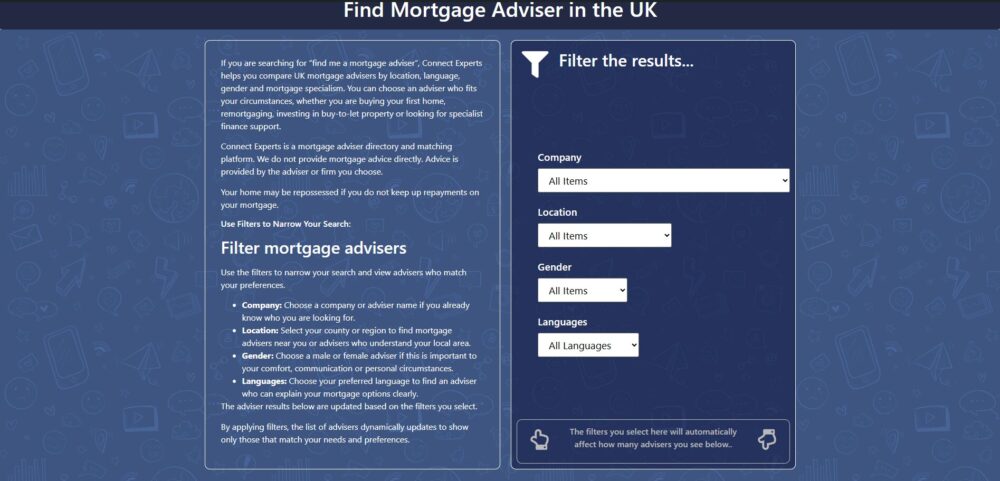
For clients looking for a complex buy-to-let adviser, they can click the “find mortgage advisers” image below
For advisers exploring or wanting to switch mortgage network #TalktoTalk Join Connect Network
FAQ: Complex Buy-to-Let Mortgages
| Question | Answer |
|---|---|
| What is a complex buy-to-let mortgage? | A complex buy-to-let mortgage is a landlord mortgage case that falls outside standard lender criteria. This may be due to the property type, ownership structure, rental model, borrower profile, portfolio size or income position. |
| Is an HMO classed as complex buy-to-let? | Yes. HMOs are often treated as complex buy-to-let because lenders may consider licensing, room sizes, management standards, tenant profile, Article 4 rules and rental structure. |
| Can landlords use a limited company for complex buy-to-let? | Yes. Many landlords use an SPV limited company for buy-to-let property. Lenders may assess the company structure, SIC codes, directors, shareholders, guarantees and source of deposit. |
| Are portfolio landlords assessed differently? | Yes. Portfolio landlords may need to provide details of their wider property portfolio, including rental income, borrowing, LTV, property values and future plans. |
| Can first-time landlords get complex buy-to-let mortgages? | Some lenders may consider first-time landlords for specialist cases, including HMOs or MUFBs, but criteria vary. Strong income, deposit, credit profile and a clear management plan may help. |
| Can adverse credit be accepted for buy-to-let? | Some specialist lenders may consider historic credit issues such as defaults, CCJs or missed payments. The outcome depends on the type, date, severity and explanation of the credit issue. |
| Why do complex buy-to-let cases need specialist lenders? | Specialist lenders may have more flexible criteria, manual underwriting and experience with non-standard property types or landlord structures. |
| How can advisers get support with complex buy-to-let cases? | Advisers can work with Connect to access lender knowledge, specialist placement support, packaging guidance and network resources for complex buy-to-let cases. |