

Complex Mortgage Cases: A complex mortgage case is not defined by one unusual detail. It becomes complex when the client’s income, credit profile, property or borrowing structure requires interpretation beyond standard lender criteria.
For an adviser, the technical challenge is to understand how those elements interact. The next task is to present them clearly enough for a lender to assess the complete risk.
Clients with Complex Cases
Mortgage networks can help advisers manage complex cases through broader lender access, placement guidance, packaging support and compliance oversight.
A stronger submission normally explains:
- Why the case falls outside standard criteria.
- How the client’s income and affordability have been assessed.
- Which documents support the application.
- What risks the lender may identify.
- Why the selected lender and product are suitable.
The purpose is not to make a difficult case appear simple. It is to make the facts clear, complete and capable of being assessed.
What Makes a Mortgage Case Complex?
A case may become complex because of the borrower, the property, the transaction or a combination of all three.
Common examples include:
- Self-employed applicants with retained profits or variable drawings.
- Clients receiving dividends, bonuses, commission or several income types.
- High-net-worth applicants whose assets are stronger than their declared salary.
- Applicants with historic defaults, missed payments or county court judgments.
- Foreign nationals or UK expatriates with overseas income.
- Portfolio landlords, limited companies or specialist buy-to-let properties.
- Mixed-use, non-standard construction or heavily altered properties.
- Transactions involving bridging finance or another defined exit strategy.
Complexity does not automatically make an application unsuitable. It means the adviser may need a lender whose underwriting approach fits the circumstances.
Start With the Complete Case
An adviser should understand the whole transaction before considering individual products.
This includes:
- The client’s objective.
- The requested loan and property value.
- Income sources and affordability.
- Credit history and recent financial conduct.
- Deposit source.
- Property type and intended use.
- Ownership structure.
- Timescale.
- Repayment or exit strategy.
This initial assessment can reveal whether the case needs specialist lender access, manual underwriting or further evidence.
Advisers who regularly handle such enquiries may benefit from a specialist mortgage network for advisers with access to both mainstream and specialist routes.
Match the Evidence to the Complexity
Standard documents may not explain a non-standard case.
Depending on the circumstances, supporting evidence could include:
- Company accounts and tax calculations.
- Business bank statements.
- An accountant’s reference or projection.
- Employment contracts and bonus records.
- Proof of overseas income.
- Visa or residency documents.
- Credit explanations.
- Portfolio schedules.
- Tenancy agreements.
- Valuation or property-use information.
- Evidence supporting the proposed exit strategy.
Each document should have a purpose. Sending unnecessary information can make the case harder to assess, while missing information may delay the lender’s decision.
The objective is to provide enough evidence for the underwriter to understand the income, property, transaction and identified risks.
Explain the Case Before Submitting It
A well-structured case summary can help the lender understand why the application has been directed to them.
The summary should explain:
- What the client wants to achieve.
- What makes the application non-standard.
- How affordability has been calculated.
- What supporting evidence is available.
- Whether any credit event or unusual feature has been explained.
- Why the lender’s criteria appear appropriate.
- What remaining points require confirmation.
This is where experienced placement support can be valuable. Connect’s specialist lending guide explains how lender criteria, packaging and case presentation work together.
Understand the Role of Manual Underwriting
Automated systems are useful for straightforward applications. However, they may not fully interpret retained profit, irregular income, overseas earnings or unusual property use.
A manually underwritten case may allow the lender to consider the supporting evidence and overall circumstances. This does not remove lending rules or affordability requirements. It provides a route for facts that cannot be assessed through a standard automated process.
The lender will still consider:
- Affordability.
- Credit risk.
- Loan-to-value.
- Security quality.
- Income sustainability.
- The purpose of the borrowing.
- The client’s ability to maintain payments.
Use Packaging Support Where Appropriate
Some cases require more preparation than an adviser can manage efficiently alongside everyday client work.
A specialist mortgage packaging service may help with initial placement discussions, document requirements and submission preparation.
Packaging support should not replace the adviser’s responsibility for suitable advice. Its purpose is to support an accurate and complete application.
Where a case falls outside an adviser’s permissions or experience, a mortgage broker referral service may provide another route while helping the adviser retain the wider client relationship.
How a Mortgage Network Supports Complex Cases
A complete mortgage network can support advisers through:
- Access to lenders covering different client and property profiles.
- Guidance on possible placement routes.
- Packaging and case-management support.
- Compliance oversight.
- Training on specialist products and lender requirements.
- Referral options where appropriate.
- Technology that supports record keeping and case progression.
The network does not decide whether a mortgage will be approved. That decision remains with the lender. Its role is to help advisers research, document and submit cases more effectively.
Connecting Consumers With Suitable Advisers
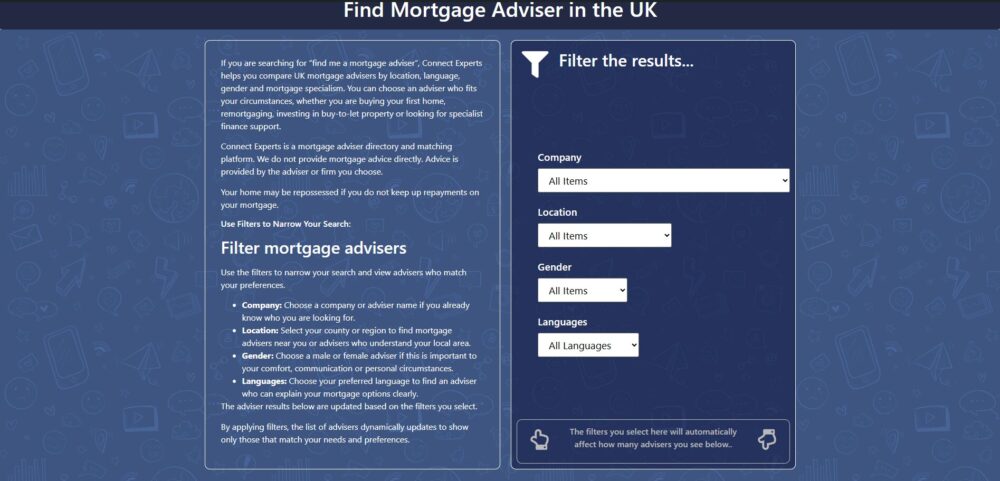
Connect Experts is the adviser directory connected to the wider Connect Group. It allows consumers to search for advisers by location and mortgage requirement.
Clients with irregular earnings can learn more about finding help with complex income mortgages.
Consumers who need broader support can also use the UK mortgage adviser directory to review relevant adviser profiles.
Connect Experts is a directory and matching platform. Mortgage advice is provided by the selected adviser or firm.
A Clear Case Is Easier to Assess
Complex lending is not about forcing an application through unsuitable criteria.
It is about understanding what makes the case different, identifying the correct evidence and selecting a lender able to assess those facts.
Good technology can support research and administration. However, adviser judgement remains central. The strongest submission is not always the largest file. It is the one that explains the relevant facts without leaving the underwriter to discover the structure alone.
Speak to Connect About Complex Case Support
Connect supports experienced mortgage advisers with lender access, specialist placement, packaging, compliance, technology and referral options.
Speak to Connect if you want to understand how network support could help your business manage a broader range of client circumstances.
Frequently Asked Questions
What is a complex mortgage case?
A complex mortgage case involves income, credit, property or transaction details that fall outside standard lender criteria. The case may require specialist products, additional evidence or manual underwriting.
Can self-employed income be used for a mortgage?
It may be accepted, subject to the lender’s criteria and affordability assessment. The lender may review accounts, tax calculations, salary, dividends, retained profits or other evidence.
Can a client obtain a mortgage after adverse credit?
It may be possible, depending on the type, value, age and circumstances of the credit event. The lender will also consider recent financial conduct, affordability and loan-to-value.
Why is case packaging important?
Case packaging helps the lender understand the application and locate the evidence needed for its assessment. Missing or inconsistent documents can cause delays or lead to further questions.
Does a mortgage network approve the application?
No. The lender makes the underwriting and approval decision. A network may support the adviser with lender research, placement, packaging, compliance and case progression.
When should an adviser refer a complex case?
Referral may be appropriate when the adviser lacks the required permissions, product knowledge, lender access or resources to manage the case properly.
This website is intended for use by professional intermediaries only. Mortgage approval is subject to lender criteria, affordability, property assessment and individual circumstances. The Financial Conduct Authority does not regulate all products and services referred to on this website.